Spinal cord injury claims solicitors.
A spinal cord injury can change almost every aspect of everyday life. Suddenly, questions about work, family life, getting around, where you can live and how you will manage in the future become very real. If it has been caused by someone's negligence, we're here to help.
We build a team around your spinal injury claim.
We are spinal cord injury claims solicitors. When you become a victim of negligence we can get you compensation to secure your immediate and long-term needs.
If your spinal cord injury was caused by an accident or medical negligence, our specialist spinal cord injury solicitors can help. We understand that a claim is about much more than the compensation you eventually receive. It is also about getting the right rehabilitation in place, securing financial help while the claim is ongoing and making sure your future needs are properly understood.
We act for people with spinal cord injuries across England and Wales. Our aim is to understand what life looks like for you now, what has changed and what support could make a genuine difference.
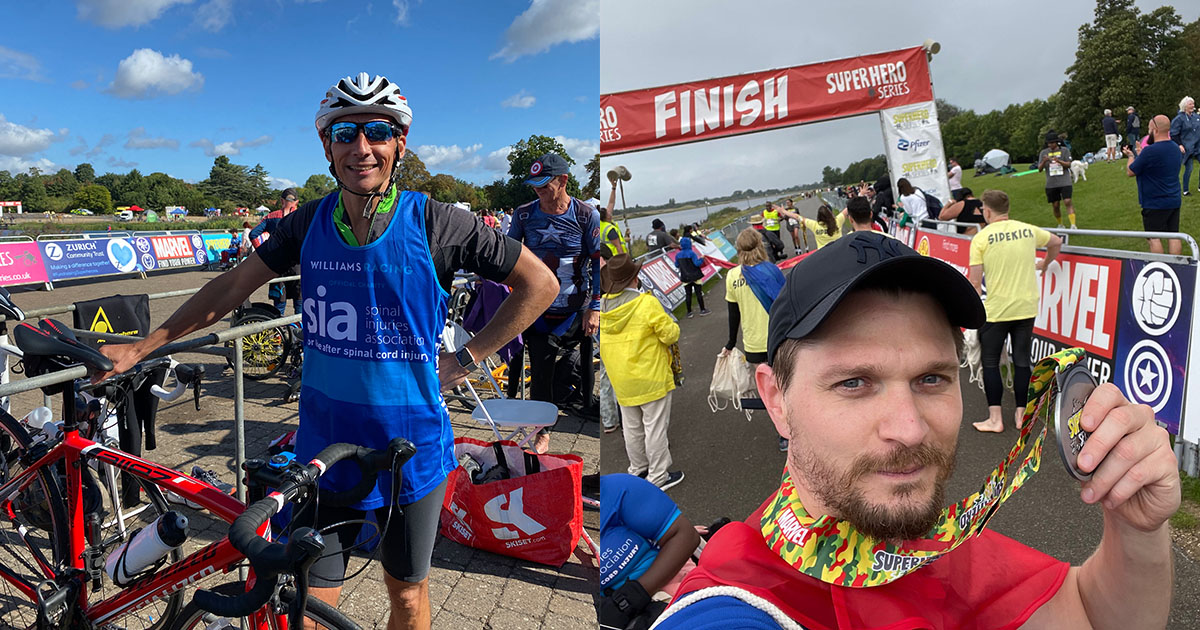
Proud to be a Trusted Partner of the Spinal Injuries Association.
Our spinal injury claims team are proud to support the Spinal Injuries Association as a Trusted Legal Partner. We offer legal advice to those they support as well as fundraise for their cause, including partnering to form a team for their Superhero Triathlon Challenges.
Looking for more detailed information?
Our spinal cord injury compensation guide explains the claims process, compensation, rehabilitation, interim payments, care, equipment, accommodation and what to expect after a spinal cord injury.
Our spinal cord injury expertise








- Experience of a wide spectrum of spinal injuries
- Accredited by the Law Society, APIL and AvMA
- Offices serving all of England & Wales
- No win, no fee funding available
Call our personal injury team today for a free consultation
Contact our medical negligence team on





Contact our spinal cord injury specialists
Frequently asked questions about spinal cord injury claims.
The terms are sometimes used interchangeably, but they do not mean quite the same thing. A spinal injury is a broader term and can include damage to the vertebrae, discs or other structures of the spine without injury to the spinal cord itself. A spinal cord injury involves damage to the cord and can affect movement, sensation and other bodily functions below the level of the injury.
Our work is principally focused on spinal cord injury claims. We can also help in some cases involving other spinal injuries where the long-term consequences are significant, particularly where substantial rehabilitation, treatment or financial support are needed.
You may be able to claim compensation if another person or organisation was legally responsible for causing your spinal cord injury, or if negligent medical treatment caused the injury or made your condition or its consequences worse.
We act for people injured in road traffic collisions, accidents at work, falls from height and other serious accidents. Our medical negligence solicitors also handle spinal injuries caused by substandard medical care, including spinal surgery negligence and avoidable neurological damage following delays in diagnosing and treating cauda equina syndrome.
It is quite common for someone to contact us without knowing whether they have a viable claim. An accident may have had several causes, or a patient may know that something went badly wrong without knowing whether the treatment was negligent. Our job is to investigate what happened and explain your options clearly.
In most cases, court proceedings must be started within three years of the accident or, if later, the date on which you first knew, or could reasonably have known, the relevant facts about your injury and its possible cause. There are important exceptions, including for children and people who lack capacity to conduct legal proceedings, and the court has a discretion in some circumstances to allow a claim to proceed outside the usual time limit. However, you should not assume that the court will allow a late claim to proceed. As the time limit can sometimes be difficult to work out, it is sensible to seek advice as early as possible.
There is no useful “average” spinal cord injury settlement.
Two people with apparently similar injuries can have very different needs. One may be able to return to some form of work while another cannot. One may need significant professional care; another may be largely independent. Much will also depend on their home, family circumstances, equipment needs and future medical care.
Compensation therefore must be calculated around the individual.
Typically, an award includes compensation for the injury itself and its effect on your life, together with financial losses and additional costs caused by the injury. In a spinal cord injury claim, these may include loss of earnings and pension, care and case management, rehabilitation and therapies, specialist equipment, adapted vehicles and the additional costs of suitable or adapted accommodation.
It is easy to see a multimillion-pound settlement reported in the press and think simply of a very large sum of money. In reality, much of that money already has a job to do. It may have to pay for care, equipment and other needs for decades.
Our guide to calculating future financial losses explains how those long-term costs are assessed. For a broader explanation of compensation, rehabilitation and the claims process, see our comprehensive spinal cord injury compensation guide.
Every spinal cord injury claim is different, but in serious cases, claims often take several years to resolve. This is particularly so where responsibility for the injury is disputed, or the long-term prognosis is still developing, meaning more time is needed to understand the injured person’s future care, rehabilitation, accommodation and other needs.
Yes. If you are unhappy with the way your claim is being handled, you are entitled to seek advice from another solicitor and, if you wish, transfer your case.
We regularly take over complex injury claims from other firms. You can read more about changing personal injury solicitors and how the transfer process works.
We are often able to deal with spinal cord injury claims under a Conditional Fee Agreement, usually known as a “no win, no fee” agreement. Other funding may sometimes be available, including legal expenses insurance.
We will explain the funding options and any potential costs or deductions clearly before you decide whether to proceed. You can also read our guide to no win, no fee injury claims.
More than compensation.
One of the things we know from acting for people with life-changing injuries is that life does not wait for the legal process.
Someone may be medically ready to leave hospital, for example, but unable to return home because they cannot use the bathroom or their wheelchair will not fit through the doors. Earnings may have stopped at precisely the time when extra costs are beginning to mount. Family members can suddenly find themselves arranging care, attending appointments and dealing with practical problems they never expected to face.
That is why our approach is to build a Team Around the Client.
Depending on what you need, that is likely to involve a clinically-qualified case manager, physiotherapist, occupational therapist, psychologist, medical specialists and experts in care, equipment, transport or accommodation. The people involved will be different for every client because the consequences of a spinal cord injury are different for every person.
We will explore rehabilitation as early as we can. Where the circumstances allow, we will also seek interim payments to help meet immediate needs while the claim continues. These may help with rehabilitation, care, equipment, adapted transport, accommodation costs or the financial pressure caused by being unable to work.
Experience matters in spinal cord injury claims.
Spinal cord injury claims can be among the most complex personal injury and medical negligence cases.
The difficult issue is not always simply what happened. There may be arguments about who was responsible, whether the injured person was partly at fault or, in a medical negligence claim, whether substandard treatment actually caused the harm complained of. Prognosis can also remain uncertain for some time, and care, equipment and accommodation needs may change as rehabilitation progresses.
We are used to dealing with those difficulties.
Our medical negligence team has recently secured a £5.6 million lump sum and lifelong annual payments for a young woman who was left permanently paraplegic following negligent scoliosis surgery.
In another case, our personal injury team secured a £2.5 million settlement for a woman with a life-changing spinal cord injury following a serious road collision. Liability remained disputed for several years, several other motorists became involved in the proceedings and there was significant disagreement between the medical experts about her future condition.
The figures are important, but they are only part of the story. What matters is making sure that difficult cases are investigated properly and that any settlement reflects what the injured person is likely to need throughout their life.
Talk to our spinal cord injury solicitors.
You do not need to understand the law, know how much your claim might be worth or have all the answers before speaking to us.
The first conversation is simply an opportunity to tell us what has happened and what you are dealing with. From there, we can investigate whether you have a claim and, if we are able to help, start looking at what you and your family need now as well as what you may need in the future.
Compensation cannot put you back in the position you were in before a spinal cord injury. But an experienced spinal cord injury solicitor can help you secure the rehabilitation, support and financial security you need for the years ahead.