Respiratory disease claims: is it too late to claim compensation?

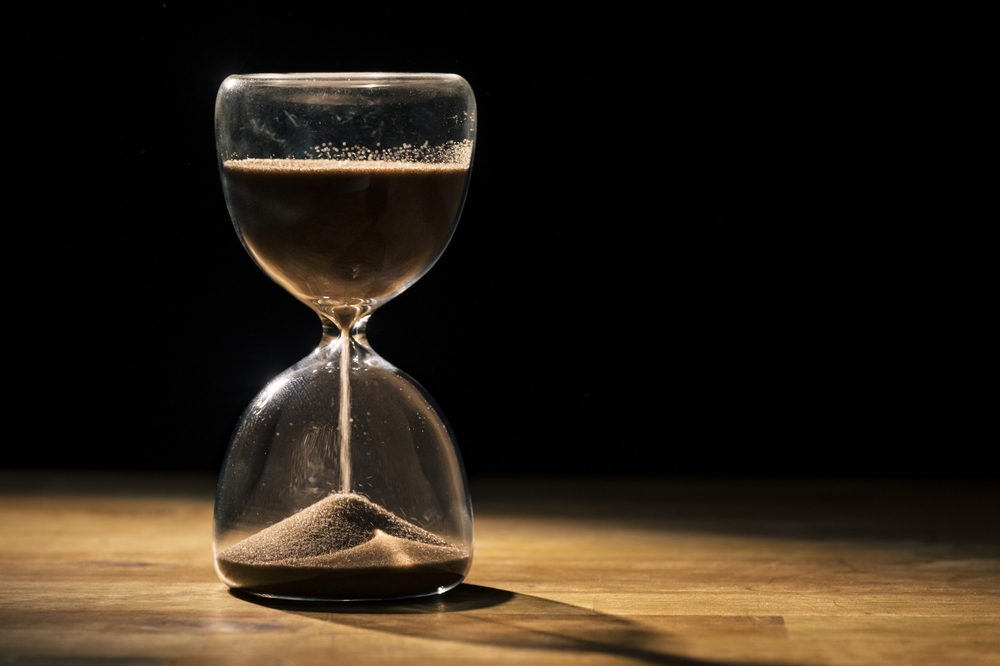
Being told you've left it too late to claim compensation isn't necessarily the end of the road. Helen Childs, a partner in our Respiratory Disease team, explains why the three-year time limit isn't always as straightforward as it sounds.
Over the years, I’ve represented many people whose claims were thought to be out of time. Some had been turned away by other solicitors. Others hadn’t sought advice because they assumed too much time had passed.
Sometimes the deadline really has been missed. But not always. And even when it has, the courts have the power to allow certain claims to proceed.
This is particularly important with respiratory diseases, where symptoms may develop gradually or appear decades after exposure to harmful dust or chemicals.
What is the time limit for a respiratory disease claim?
Under the Limitation Act 1980, you generally have three years to begin court proceedings for a personal injury claim. But three years from when?
It’s a question that frequently arises in claims involving asbestos-related diseases, silicosis and occupational asthma.
The usual starting point is when the injury occurred, or the person’s date of knowledge, if later.
Put simply, this is when you knew you had a significant illness and that it might be connected to your working conditions. You must also have known who might be responsible.
You don’t need to know that anyone was legally negligent.
Importantly, the law also considers what you could reasonably have discovered by seeking medical or other expert advice.
Why is the date of knowledge so difficult to establish?
Imagine someone who has worked in a dusty environment for years. They develop a persistent cough or become increasingly breathless.
They might put it down to getting older, smoking or being unfit. Perhaps their GP initially attributes the symptoms to asthma or another common condition.
Years may pass before anyone suggests that their illness could be work-related.
So, when should they reasonably have realised what was happening?
I’ve seen cases where this has been far from obvious. Someone may have experienced symptoms for years without appreciating their significance or having any reason to connect them to their working conditions.
Establishing the correct date of knowledge can make all the difference to whether a claim is being brought in time.
What happens if someone has died from a respiratory disease?
Where someone has died, their estate or dependants may still be able to pursue compensation.
Different limitation rules apply to these claims. Generally, there is a three-year period running from the date of death or a later relevant date of knowledge.
Sometimes the cause of death only becomes clear following an inquest.
However, a death doesn’t automatically give the family a fresh three years. If the deceased person’s claim was already out of time, this can create difficulties for any subsequent claim.
These cases need particularly careful consideration.

Our respiratory disease magazine.
Can a respiratory disease claim proceed after the deadline?
Yes. And this is something I feel particularly strongly about publicising.
Section 33 of the Limitation Act 1980 gives the courts discretion to allow certain claims to proceed even when the normal time limit has expired.
The court considers all the circumstances, including why the claim was delayed, how long the delay lasted, what advice was obtained and whether the evidence has become less reliable over time.
The question is whether it would be fair to allow the claim to proceed, taking account of the prejudice to both sides.
This discretion is especially important in asbestos cases.
Mesothelioma and asbestosis can develop 40 or 50 years after someone was exposed to asbestos. By the time a claim arises, witnesses may have died, employers may have disappeared and documents may have been lost.
But if the evidence was already decades old when the limitation period began, a defendant may struggle to show that the additional delay has significantly affected its ability to defend the claim.
We’ve successfully pursued many cases where limitation was disputed.
One particularly important example is Lloyd v Humphreys & Glasgow Ltd [2015]. Mr Lloyd had previously settled a claim for asbestos-related disease against other former employers. Following his death from mesothelioma, his widow sought compensation from another employer.
Despite an earlier settlement and considerable limitation difficulties, we successfully persuaded the High Court that her claim should be allowed to proceed.
We’ve also settled an asbestosis claim against National Grid that was more than 20 years out of time.
In another case, we pursued a mesothelioma claim against Babcock & Wilcox more than a decade after the man’s death. His widow had simply been unable to face bringing the claim sooner.
Examples like these are why I’m always reluctant to dismiss a potential claim simply because a deadline appears to have passed.
Does the same approach apply to silicosis and other respiratory diseases?
The legal principles are the same, although the circumstances can be different.
Some forms of silicosis develop much more rapidly than asbestos-related diseases. This is particularly concerning among workers exposed to high concentrations of silica dust when cutting and polishing artificial stone kitchen worktops.
Where an illness develops relatively quickly, a delay in bringing proceedings may have a greater effect on the evidence.
However, the strength of the underlying claim is also relevant.
In Dowdall v William Kenyon & Sons Ltd [2014], a mesothelioma case, the court allowed an out-of-time claim to proceed despite a substantial delay.
The judge considered that the defendants had little prospect of successfully defending the claim and that the delay had not materially disadvantaged them.
It’s an important reminder that the court looks at the whole picture.
For someone who developed silicosis after working in particularly unsafe conditions, the evidence of those conditions could therefore be highly relevant when asking the court to exercise its discretion.
Of course, every case turns on its own facts.
What if a solicitor has already told you it's too late?
I’d encourage you to get a second opinion.
Some firms are understandably reluctant to take on claims where the limitation period is about to expire or has already passed.
We take a different approach, looking at each case individually before deciding whether it can be pursued.
That doesn’t mean every out-of-time claim will succeed. Far from it. But my experience has taught me that there can be good reasons to investigate further, even where another firm has decided not to proceed.
If you’ve been diagnosed with a respiratory disease, please seek specialist advice as soon as possible. And if you’ve already been told that you’ve left it too late, don’t assume that’s necessarily the end of the matter.
Please seek advice as soon as possible from our specialist team. The call is free and you are under no obligation.
Ask us a question