Swindon’s industrial heritage and the asbestos legacy it left behind


Few towns in Britain were transformed by the railway quite as dramatically as Swindon.
As the Industrial Revolution swept over the country (and indeed much of the world), Swindon was slowly transformed from an agricultural and wool town to an industrial powerhouse.
At the beginning of the nineteenth century, Swindon was still a relatively small market town surrounded by rural Wiltshire. The first signs of change came with the canals. The Wilts & Berks Canal reached Swindon in 1804, bringing coal and other goods through the town, while the North Wilts Canal opened in 1819 and connected Swindon with the wider canal network.
However, it was the arrival of the railway that changed Swindon forever.
The town built by the railway
The Great Western Railway opened its Swindon Works in 1843. What began with around 180 employees developed into one of the largest railway engineering complexes in the world. By the early twentieth century, more than 14,000 people worked there, which was around a quarter of Swindon’s entire population at the time!
For generations of Swindon families, the Works were simply part of life.
Locomotives, carriages and rolling stock were designed, built, repaired and maintained there. Among the locomotives produced at Swindon was the famous City of Truro, built in 1903 and generally recognised as the first steam locomotive to exceed 100mph. More than half a century later, Swindon also produced Evening Star, completed in 1960 and the final steam locomotive built by British Railways.
The influence of the Great Western Railway stretched well beyond the factory gates. The Railway Village provided homes for workers, while schools, medical facilities, recreational spaces, the Mechanics’ Institute and St Mark’s Church helped create an entire community around the Works. Swindon was no longer simply a town with a railway works: it had become a railway town.
Following nationalisation in 1948, the Works became part of British Railways. Steam locomotive production ended in 1960, although Swindon went on to build diesel-hydraulic locomotives during the 1960s. Repair and engineering work continued for another two decades before the Works finally closed in March 1986, bringing more than 140 years of railway engineering in Swindon to an end.
Much of that extraordinary history can still be seen today in the Railway Village, the STEAM Museum and the surviving buildings of the former Works.
But Swindon’s industrial success left another, far darker legacy.
The Swindon disease
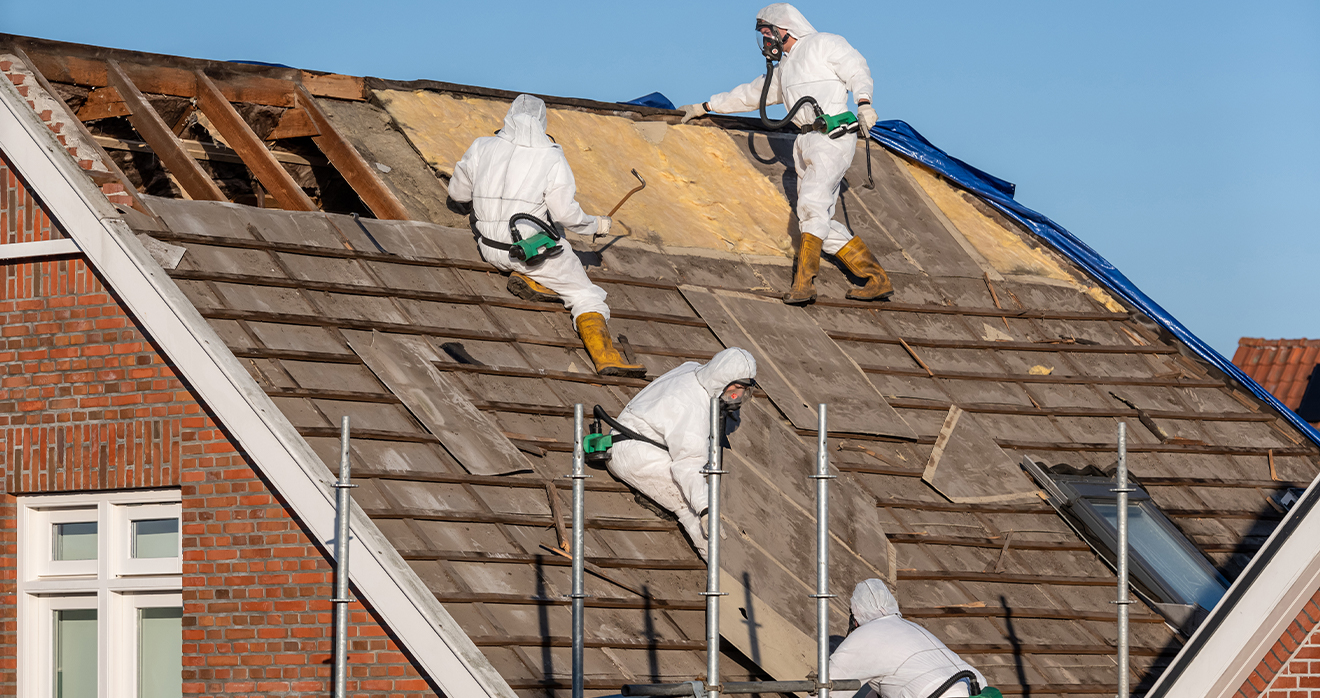
Asbestos was once prized throughout British industry. At the railway works it could be found in and around locomotives, boilers, pipework and other equipment. Former Swindon railway workers have described removing asbestos lagging from pipes and locomotives during repair work, often in conditions where substantial quantities of it were released.
The consequences would not necessarily become apparent for decades. Mesothelioma and other asbestos-related diseases can have a very long latency period, meaning that illnesses diagnosed today may have been caused by exposure many years ago. Exposure was not necessarily limited to the people working directly with asbestos either: asbestos fibres could be carried home on contaminated work clothes, creating the potential for secondary exposure among family members. So closely has mesothelioma become associated with Swindon’s industrial past that the condition has sometimes been referred to locally as ‘the Swindon Disease’.
And the statistics demonstrate why that association has endured. The Health and Safety Executive’s latest geographical analysis records high numbers of mesothelioma deaths among Swindon residents between 1981 and 2024. Swindon’s standardised mortality ratio for men over that period was 160 – around 60% higher than the Great Britain average. Asbestos exposure was not just confined to the railway. Swindon developed other major industries during the twentieth century, including aircraft manufacture at South Marston and vehicle production at Pressed Steel’s factory in Stratton St Margaret.
Asbestos exposure was not just confined to the railway. Swindon developed other major industries during the twentieth century, including aircraft manufacture at South Marston and vehicle production at Pressed Steel’s factory in Stratton St Margaret.
Although the use of asbestos has now been banned, its legacy has proved much harder to leave behind. Because asbestos-related diseases can take decades to develop, the working conditions of the twentieth century continue to affect families well into the twenty-first.
The legal legacy
The human cost of asbestos exposure has also left a significant legal legacy. Mesothelioma claims are commonly brought as civil claims against former employers, occupiers, insurers or other responsible parties. They often depend on reconstructing working conditions many decades after the exposure occurred, using employment records, witness evidence and historic knowledge of asbestos risks.
The number of cases remains substantial. The Health and Safety Executive reported 2,146 mesothelioma deaths in Great Britain in 2024, still reflecting past occupational asbestos exposure. Separately, the Diffuse Mesothelioma Payment Scheme received 395 applications between April 2024 and March 2025, and 3,940 applications between April 2014 and March 2025. The scheme exists for people who were negligently exposed to asbestos at work but cannot bring a civil claim because the relevant employer no longer exists and the employer’s liability insurer cannot be traced.
In memoriam
In 2003, Swindon’s Mesothelioma Memorial Garden opened in Queen’s Park as a permanent place of remembrance for those affected by the disease. The garden was renovated and reopened in 2024, ensuring that this part of the town’s history is not forgotten.
Swindon has every reason to be proud of its industrial heritage. The railway transformed the town, supported generations of families and produced some of the most celebrated locomotives ever to run on Britain’s railways.
But industrial history is rarely without consequence. Almost forty years after the Swindon Works closed its gates forever, the illnesses caused by asbestos remain a powerful reminder that the legacy of the railway age is, for many Swindon families, deeply personal.
Sources
- https://collections.canalrivertrust.org.uk/bw27
- https://www.thegenealogist.co.uk/featuredarticles/discover-your-ancestors/periodical/34/swindon-175-years-on-track-5256/
- https://www.bbc.co.uk/news/uk-england-wiltshire-35605986
- https://www.visionofbritain.org.uk/unit/10104178/cube/TOT_POP
- https://www.mycityhunt.co.uk/cities/swindon-gb-10547/poi/st-marks-church-swindon-35034
- Swindon: History and Guide. Chandler, John H. Published by Sutton Publishing Ltd, 1992
- Health and Safety Executive, Mesothelioma deaths by Geographical Area, 2026: Mesothelioma deaths for Local and Unitary Authority areas in Great Britain 1981–2024 (July 2026), p. 20, Figure 12, https://www.hse.gov.uk/statistics/assets/docs/mesoarea.pdf
- https://www.hse.gov.uk/statistics/causdis/overview.html
- https://www.gov.uk/government/publications/diffuse-mesothelioma-payment-scheme-annual-review-2024-to-2025/diffuse-mesothelioma-payment-scheme-annual-statistics-april-2014-to-march-2025

Airborne Magazine
Read the latest news and advice from our team’s “Airborne” newsletter