Silicosis compensation claims.
We are specialist respiratory disease solicitors with extensive experience of helping people claim compensation for occupational lung diseases. If you have been diagnosed with silicosis, we can investigate your claim, even if you think it may be out of time or other solicitors have been unable to help.
Call for a free consultation about making a silicosis claim
Your dedicated team of silicosis and respiratory disease solicitors.
In our experience, people diagnosed with an occupational lung disease often have as many worries about their work and finances as they do about their health. Some are still working and wonder how much longer they can continue. Others have already had to give up their jobs. We can help you find out whether your current or former employer was responsible and whether you have a claim for compensation.
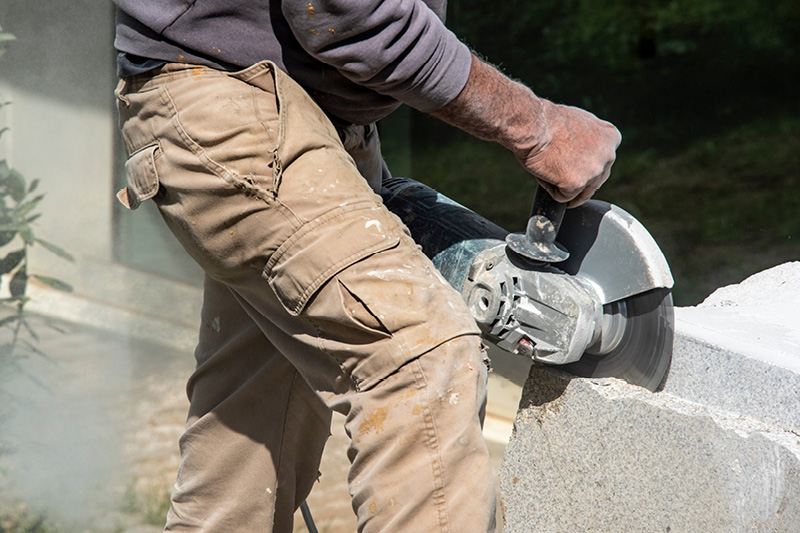
Silicosis has long been associated with industries such as construction, mining and stonemasonry, and more recently, serious concerns have emerged about workers developing the disease after cutting and polishing artificial or engineered stone, particularly when manufacturing and fitting kitchen worktops.
Engineered stone, also known as agglomerated stone, can contain up to 95% crystalline silica, and cutting, drilling or polishing it can release dangerous levels of fine dust unless effective precautions are taken.
Australia prohibited the manufacture, supply and use of engineered stone from July 2024 following serious concerns about silicosis among workers, including younger people.
In the UK, the Health and Safety Executive (HSE) published new guidance in May 2026, warning against dry cutting of engineered stone and emphasising the importance of water suppression to control silica dust. A nationwide inspection programme followed, with enforcement action against businesses failing to protect their workers.
If you believe your silicosis was caused by exposure to silica dust at work, please contact our team. We can investigate what happened and advise whether you may be entitled to compensation.
Contents
- Can I claim compensation for silicosis?
- Making a silicosis compensation claim
- Can I make a silicosis claim on a No Win No Fee basis?
- How long do I have to make a silicosis claim?
- How much compensation can I claim for silicosis?
- I am not from the UK: can I still claim compensation?
- An outstanding track record of respiratory disease claims
- Meet our silicosis and respiratory disease experts
- FAQs on silicosis: what you need to know
Can I claim compensation for silicosis?
You may be able to make a silicosis compensation claim if your illness was caused by your employer’s failure to take reasonable precautions against exposure to silica dust. We can also investigate other occupational illnesses that may give rise to silica dust compensation claims.
Employers have legal duties to assess and control exposure to hazardous substances. Depending on the work involved, precautions may include suitable dust extraction, water suppression, respiratory protective equipment, training and health surveillance.
If those precautions were inadequate and you developed silicosis as a result, you may have grounds for a claim.
You may still be able to claim if you left the job years ago or your former employer has gone out of business. Tracing employers and their insurers is familiar territory for our respiratory disease team, and we regularly investigate claims involving exposure many years or decades ago. You do not need to work out who was responsible before contacting us. That is part of our job.
Making a silicosis compensation claim
We will begin by discussing your diagnosis, employment history and the circumstances in which you were exposed to silica dust.
If we can take your case forward, we will investigate the working conditions, trace relevant employers and insurers, obtain available records and arrange independent medical evidence where necessary.
We appreciate that recalling jobs you did many years ago is not always easy, particularly if you worked for several different employers. We are used to piecing together employment histories and investigating cases where records are incomplete.
We’ll keep you regularly updated as your case progresses and we’ll always be happy to answer any questions you have.
Can I make a silicosis claim on a No Win No Fee basis?
If we can assist you with a silicosis claim, we will usually be able to act on a No Win No Fee basis.
If your claim is successful, the defendant or their insurer will usually pay most of your legal costs. Depending on the terms of your agreement with us, an insurance premium may need to be paid from your compensation. We’ll explain exactly how this works, and what it could mean for the amount you receive, before you sign up.
There will be nothing to pay if your claim does not succeed, so you can ask us to investigate your potential claim without worrying about legal fees.
How long do I have to make a silicosis claim?
In England and Wales, the usual time limit for bringing a personal injury claim is three years. However, with an occupational disease such as silicosis, the position is not always straightforward.
The three years may run from the date you first knew, or could reasonably have been expected to know, that you had a significant injury attributable to your workplace exposure. This is known as your date of knowledge.
That’s not necessarily the date you were diagnosed. If you had symptoms for some time and had reason to connect them with your work, the limitation period may have started earlier. That’s why it’s so important to seek advice promptly.
If a claim cannot be settled within the applicable limitation period, court proceedings will normally need to be started before it expires.
Even if you were diagnosed more than three years ago, please speak to us. In certain circumstances, the court has discretion to allow a claim to proceed outside the usual time limit.
We have considerable experience of investigating occupational disease claims that other solicitors have considered out of time. If you’ve previously been advised that it’s too late to claim, we’d be happy to take another look. We’ve dealt with many difficult limitation arguments over the years and know that the position isn’t always as clear-cut as it first appears.
For more information, see our guide to respiratory disease time limits.
If someone in your family has sadly died from silicosis, you may also be entitled to bring a claim. Different limitation provisions can apply following a death, and we can advise you about your circumstances.
How much compensation can I claim for silicosis?
The amount of compensation you may receive will depend on the severity of your illness, how it affects your life and the financial consequences for you and your family.
Some people diagnosed with silicosis can no longer manage the work they’ve done for years. Others find they need more help at home or have to change how they spend their days. We look carefully at these changes when assessing how much compensation to claim.
Compensation can include damages for pain, suffering and loss of amenity, together with lost earnings, pension losses, treatment costs and care and assistance. Where your condition is likely to affect your future health or ability to work, those longer-term consequences must also be considered. It’s important to get the figures right, particularly with a disease that may become worse over time. We consider what your illness is costing you now and what additional expenses you might face in the future.
A claim for compensation can also help you access bespoke private medical treatment.
Our guide to calculating past and future financial losses explains how those needs are assessed.
You may qualify for Industrial Injuries Disablement Benefit if you developed silicosis through eligible employment.
You may also qualify for a lump sum payment under the Pneumoconiosis etc. (Workers’ Compensation) Act 1979. This may be an option if your former employers are no longer trading, although other conditions must also be met. There are strict deadlines for applying, so please don’t delay in seeking advice.
We will ensure a full assessment of your benefits entitlements is undertaken, and if you receive compensation we will also advise you about preserving your ongoing entitlement to means tested benefits.
I am not from the UK: can I still claim compensation?
Yes. If you were exposed to silica dust while working in England or Wales, you may be able to claim compensation here, even if you are not British or have since moved abroad.
We may also be able to help if you worked in Scotland or Northern Ireland for a company based in England or Wales. If you were exposed to silica dust while working overseas and now live in England or Wales, we can look into whether you could bring a claim in the country where you worked.
Our team includes specialist lawyers from Romania and Poland who can help if English is not your first language.
Please get in touch if you’re unsure whether you can claim. We’ll be happy to discuss where you worked, who employed you and what options may be available.
An outstanding track record of respiratory disease claims
Our industrial disease team has spent many years representing people with serious occupational lung diseases. These cases often involve investigating exposure many years ago, tracing former employers and their insurers, and dealing with difficult arguments about time limits.
Led by Helen Childs, our nationally recognised team has recovered more than £7 million in compensation for respiratory disease clients in the last 12 months, and many millions more in previous years.
Some of the cases we take on have already been turned down by other firms. That doesn’t necessarily mean there is no claim. We have spent years investigating old workplace exposures, tracking down employers and insurers, and finding evidence where records are missing or businesses have long since closed.
Helen and her colleagues are nationally recognised for their specialist industrial disease work by independent legal directories including The Legal 500 and Chambers and Partners.
- We bring that established expertise to our work investigating silicosis compensation claims.
- We put you and your family first, with appointments available outside normal office hours where needed.
- We have a 90% success rate in our respiratory disease claims work, including cases previously rejected by other firms.
- Our team includes independently accredited occupational disease specialists.
- We aim to secure compensation as quickly as possible, often within months where circumstances permit.


Talk to our silicosis and respiratory disease team now on
...or you can message us
If you would rather message us, we can get back to you and book in a call at a time that is more convenient.
If you would rather message us, we can get back to you and book in a call at a time that is more convenient.
Meet our silicosis and respiratory disease experts













FAQs on silicosis: what you need to know
Silicosis is a serious lung disease caused by breathing in fine particles of crystalline silica dust, known as respirable crystalline silica (RCS).
The finest particles of silica dust can lodge deep in the lungs. Over time, they can cause inflammation and scarring, known as fibrosis. This damage makes it harder for the lungs to do their job.
Silicosis is generally irreversible and can continue to worsen even after exposure to silica dust has stopped.
Silicosis is a dose-dependent illness. Generally, the more silica dust a person breathes in, the greater their risk of developing the condition. Silicosis often takes many years to develop, sometimes 10 to 20 years after exposure began. But people exposed to high levels of silica dust can develop the disease much sooner. This is known as accelerated silicosis. Where exposure is particularly intense, an acute form of the disease can develop within months.
Recent cases involving engineered stone workers have shown how quickly serious lung damage can occur.
There is no single level of exposure that will cause silicosis in everyone. The amount of dust, length of exposure, working conditions and precautions taken all matter.
The most common symptoms include a persistent cough, breathlessness, tiredness and weakness. Some people also experience weight loss.
Symptoms may be mild or absent in the early stages. As the disease progresses, everyday activities such as walking or climbing stairs can become increasingly difficult.
Severe cases can lead to respiratory failure and may be life-threatening. Although there is no cure, treatment and medical support can help manage symptoms and improve quality of life.
You can find further information in the NHS guide to silicosis.
Crystalline silica is found in materials including stone, sand, bricks, concrete and clay. Dangerous dust can be released when these materials are cut, drilled, ground or polished.
People working in construction, demolition, mining, quarrying and stonemasonry are among those most likely to encounter silica dust. Exposure is also a concern in sandblasting, brick and cement manufacturing, pottery and ceramics, and jobs involving the manufacture, cutting or fitting of artificial stone worktops.
If you have a persistent cough, breathlessness or other respiratory symptoms and believe you may have been exposed to silica dust, you should contact your GP.
Explain your work history and the materials you handled. You may be referred for investigations including a chest X-ray, CT scan or lung function tests.
Although there is currently no cure for silicosis, treatments are available to help relieve symptoms and manage complications. Your medical team may also recommend monitoring for associated conditions such as tuberculosis and pulmonary hypertension.
If you have been diagnosed with silicosis following workplace exposure, you should consider obtaining specialist legal advice. We can investigate whether your employer took adequate precautions and whether you may be entitled to compensation.
Yes. Exposure to respirable crystalline silica is associated with serious health conditions including lung cancer and chronic obstructive pulmonary disease (COPD). Silicosis can also increase the risk of tuberculosis, kidney disease and other complications.
If you have developed a respiratory illness after working with silica-containing materials, please contact us. We can discuss your work history and advise whether there may be grounds for a claim.
If you have been diagnosed with silicosis, compensation may help replace lost earnings, meet treatment and care costs, and provide greater financial security for your family.
Because silicosis can progress, it’s important to consider what may happen to your health in the future. In appropriate circumstances, a provisional damages settlement may be possible, preserving the right to seek further compensation if a specified serious deterioration occurs.
If you’re thinking about making a silicosis claim, we’d be pleased to talk it through with you. We can explain whether compensation may be available and what would be involved in pursuing a claim.
Call our specialist silicosis compensation team now