Women and prosthetic limb use: A clinical perspective

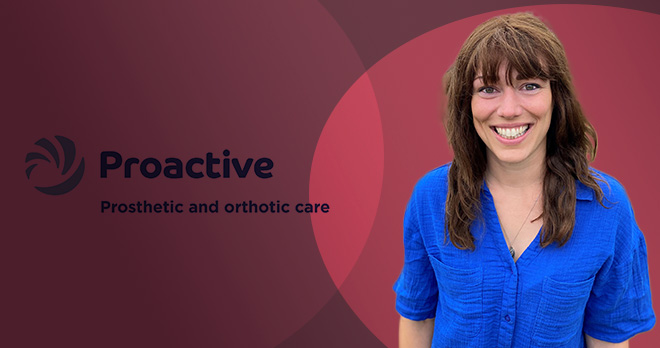
This article has been written by Katy McIntosh, Clinical Manager and Clinical Specialist Prosthetist at Proactive Prosthetics.
When discussing prosthetic rehabilitation, it is important to recognise that no two people experience limb loss or absence in the same way. However, women can face a unique set of considerations throughout their lives that may influence prosthetic comfort, mobility and overall wellbeing.
As clinicians, our role is not simply to provide a prosthesis. It is to understand the person using it, the changes taking place in their life, and how we can adapt their prosthetic management to support them through those transitions.
The impact of hormonal changes
The effect that hormonal fluctuations can have on residual limb volume and sensation is a topic that, over years of subjective observation, I have integrated into my assessments and prescribing considerations.
Many women report changes in swelling and fluid retention at different stages of their menstrual cycle, during pregnancy, and throughout perimenopause and menopause. We know, and it is widely accepted, that even relatively small changes in limb volume can affect socket fit, leading to discomfort, altered gait, skin irritation, or reduced confidence when walking. This change is well documented and considered when treating primary amputees post-surgery, where oedema reduces with healing and muscles often atrophy with time. I would wager a guess however that the link with hormonal changes is not something so routinely discussed in clinical appointments. Perhaps it feels taboo to ask, some people don’t think to discuss it – or perhaps some clinicians just simply wouldn’t know what to do with the information if it were a direct line of questioning in a clinical assessment.
For prosthetic users, socket fit is the most important part of their device. A socket that fits well one day may feel noticeably different the next if residual limb volume changes. Recognising these patterns can be difficult, (partly because they don’t always happen predictably), with maintenance of consistent socket fit and comfort remaining one of prosthetics’ greatest challenges – where a solid carbon socket surrounds a changeable part of a person’s body. Working proactively with a prosthetist can help ensure that adjustments are made before minor issues become significant barriers to mobility, and I would encourage all women to have this conversation in clinic.
Pregnancy and beyond
Pregnancy presents a particularly dynamic period for women with limb loss or absence.
As the body changes to support a growing baby, weight distribution shifts, fluid retention increases, and it is common for residual limb volume to fluctuate. These changes can, again, significantly affect prosthetic fit and subsequent function. As a result, some women require more frequent prosthetic reviews throughout pregnancy, while others benefit from temporary socket modifications or adjustments to accommodate changing limb volume.
Safety is another key consideration. Changes in balance, centre of gravity and fatigue levels through pregnancy all influence mobility – and are all factors which particularly impact people with lower limb loss. A recent article surveying women with lower limb loss in Canada found that almost 38% reported experiencing at least one fall during pregnancy. Working with people through this period and discussing what can be done to accommodate changes and manage this risk as far as possible is an important collaborative conversation.
After birth, the process does not immediately return to normal. Residual limb volume often reduces again (gradually), body weight changes over time, and women frequently face a period of ongoing physical adjustment while recovering from pregnancy and caring for a newborn child. This in itself presents a completely new set of challenges… prioritising prosthetic appointments in weeks filled with changeable circumstances and an unpredictable baby – who have their own needs and appointments which often take precedence. Many women remain the primary caregiver for their newborn child, which can make it difficult to schedule and attend clinical reviews, particularly when frequent prosthetic adjustments may be required.
Flexibility, understanding and proactive communication are essential during the post-partum period. Prosthetic care needs to work around real life as far as possible. Supporting a new mother may involve adapting appointment schedules, planning reviews more strategically, or simply understanding that rehabilitation exists alongside the demands of family life! This is generally far easier to accommodate in a private clinical setting where the waiting lists are considerably shorter, diaries are generally more flexible, and patients have direct lines of contact with their familiar prosthetist.
Cosmetic misconceptions?
There remains a common perception that women place greater importance on cosmetic prosthetic finishing than men. Challenging this theory is actually one of the drivers for the majority of this piece.
In our clinical experience, this is not at all what we routinely see reflected in practice – though is something we understand is assumed by many.
Like all prosthetic users, women have highly individual priorities. Some place significant value on cosmetic appearance, while others are far more focused on comfort, function, sporting activity, durability, workplace requirements or ease of maintenance. It is a very individual preference and – as when considering a new pair of shoes, a car, or simply what to put on in the morning – individual people will make decisions individual to them. We often see these decisions being made on a sliding scale of appearance versus perceived functionality. That isn’t to say that highly true-to-life cosmetic solutions aren’t functional – but often the weight or maintenance added impact the ease of use or environment it can be used in, thus giving a functional consideration.
Across our UK clinics, we do not observe a consistent pattern suggesting that women value cosmetic finishing more highly than men. In reality, most patients simply want a prosthesis that helps them live their lives in the way that matters most to them – some with cosmesis, some without.
As clinicians and litigation teams, it is important that we listen to individual goals rather than make assumptions based on gender.
Nat's Story
A recent example from my practice is Nat, a young working mother who already had one young child when she became pregnant with twins.
Throughout her pregnancy, Nat remained determined to stay active and continue running and exercising for as long as possible. The question was never whether she could remain active, instead, the focus was on understanding the changes taking place and adapting her prosthetic management accordingly.
As her pregnancy progressed, residual limb volume fluctuated, her body shape changed, and her balance requirements evolved. Growing twins is a tiring business and Nat wasn’t able to run as regularly as she would like due to fatigue, discomfort and eventually safety/balance concerns. Despite this, she remained focussed on doing what she could and staying active with her young toddler. Regular communication and timely adjustments to her activity-specific running limb helped ensure her prosthesis continued to support her for as long as possible into the final trimester.
Following the birth of her twins, a new set of challenges emerged. Like many new parents, Nat found that energy levels became a significant factor. Sleep deprivation, the unpredictable nature of caring for a growing family, post-partum recovery and ongoing weight loss all similarly had an impact. At the same time, residual limb volume gradually reduced as her body recovered from pregnancy. This required further prosthetic review and adaptation to maintain comfort and performance.
What stood out most throughout Nat’s pregnancy was her determination to remain active and her flexibility with ever-changing circumstances. There was never a question of “if” she would return to running. The challenge was understanding how her body was changing and ensuring her prosthetic provision evolved alongside those changes.
Reflecting on this ongoing period, Nat adds that:
“The socket fit was probably the biggest challenge for me, so it was really helpful to get ahead of that from the start with a larger socket this time around. Another ongoing challenge has been my skin. With the kids keeping me on my feet, it’s been difficult to give my leg the breaks it needs, which has led to a painful fungal rash. Exploring different sweat-wicking options has made a real difference.”
“It might feel a little embarrassing to talk about, but I think pelvic floor recovery is something we should discuss more openly. One of the unexpected challenges I’ve faced is that I can’t yet trail run on my everyday prosthetic leg because the impact places too much strain on my pelvic floor. The result is that bladder control becomes much harder to manage. With my running blade, however, the energy absorption is much better, which makes a noticeable difference and allows me to run with more confidence.”
Today, reviews and adjustments continue, but Nat is back to running and doing what she loves.
In summary
Women’s health, prosthetic limb use and rehabilitation cannot be viewed in isolation.
Hormones can influence socket fit. Pregnancy can alter mobility and balance. Motherhood can impact appointment attendance, energy levels and rehabilitation timelines. Body image and mood may also fluctuate as life circumstances change, as they do for us all.
Within all of this, it is important to remember that these considerations do not define everything a woman is and what she needs from her prosthetic clinic. Women with limb loss navigate the same life stages as everyone else, from pregnancy and parenthood to career progression, sport and healthy ageing. Prosthetic care works best when we recognise those changes, respond to them early, and focus on what matters most to the individual. The challenge is rarely ability, more often, it is creating the right support and environment to enable the person to maximise their capabilities in all aspects of their life.
Related services
Read more insights from our experts.


View more articles related to Amputation and Team Around the Client