Silicosis: can I claim compensation if I was self-employed?

If you've been diagnosed with silicosis after years of working for yourself, you may assume there's nobody from whom you can claim compensation. Annabelle Neilson, a partner and head of our London Respiratory Disease team, explains why that isn't necessarily the case.
If you’ve spent much of your working life self-employed, you may not have considered the possibility that someone else could have been responsible for your exposure to silica dust. But how much control did you really have over the conditions in which you worked?
When investigating a silicosis compensation claim, I will establish who was responsible for your working conditions and what they could reasonably have done to protect you from breathing in silica dust.
Could you have been an employee despite being classed as self-employed?
You may have been classed as self-employed for years, submitted weekly invoices and paid your own tax, yet worked almost exclusively for one company.
Perhaps you were expected to arrive at a particular time each morning, were told which jobs to do and used machinery and equipment provided by the company.
Being registered as a subcontractor under the Construction Industry Scheme (CIS) doesn’t necessarily mean you were self-employed in the eyes of the law.
I’d want to know how the arrangement worked in practice, including how much say you had over the work you did, whether you could turn down jobs and whether you could send someone else in your place.
But even if you were genuinely self-employed, there may still be grounds for a claim.
Who was responsible for protecting you from silica dust?
Businesses have health and safety responsibilities towards people other than their own employees.
For example, since March 1995, on construction sites where several contractors are working the principal contractor has responsibilities for managing health and safety, including coordinating the work of different trades.
Similarly, if you were contracted to work in a stone cutting workshop, much of what happened there may have been beyond your control. The business operating the workshop might have provided the machinery and been responsible for maintaining the dust extraction equipment.
That’s particularly relevant to people who’ve worked in the manufacture and fitting of engineered stone kitchen worktops.
There may be several businesses whose working practices contributed to your exposure.
When investigating a claim, we’ll look closely at the health and safety requirements in force at the time you worked. Generally, we need to establish that someone owed you a duty of care, was negligent and that their negligence caused or made a material contribution to your illness.
Silicosis can result from years of exposure to silica dust. If you’ve worked for several businesses, we may also need to establish how much of your illness is attributable to the negligence of each, as that can affect the amount of compensation you recover.
What if the dust came from someone else's work?
You don’t need to have spent your working life cutting stone or concrete to develop silicosis.
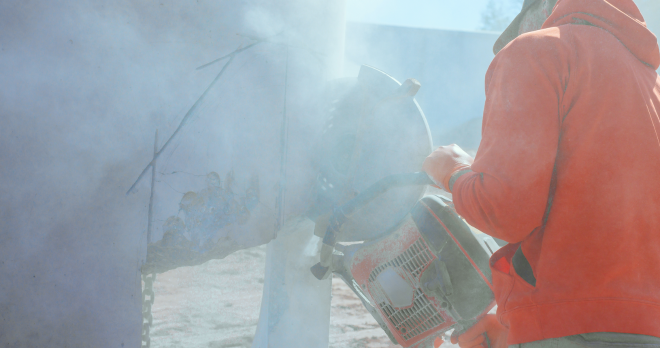
A self-employed electrician or plumber might spend much of the day working in a confined space alongside someone cutting concrete or chasing out walls. However careful they are about their own work, they may have little control over the dust they’re breathing in.
My colleague Jennifer Seavor has written about the risks of exposure to silica dust on construction sites.
When I take someone’s working history, I’m just as interested in what the people around them were doing as I am in their own work.
What if I didn't always wear a mask?
You may look back now and wish you’d taken more precautions yourself, particularly knowing what you now do about silicosis.
Self-employed tradespeople have health and safety responsibilities of their own. But even if you could reasonably have taken more precautions yourself, that doesn’t necessarily mean you can’t claim compensation, although it could affect the amount you receive.
I’d want to know what you understood about the dangers of silica dust at the time, whether anyone had explained the risks to you and what precautions were available.
But wearing a mask is only part of the picture. I’d also want to know what, if anything, was being done to stop so much dust getting into the air in the first place.
What if I've worked for dozens of contractors?
Few people can remember the name of every contractor they’ve worked for or every building site they’ve worked on. I regularly find myself asking people about jobs they did 30 or 40 years ago. Sometimes just remembering the name of a foreman or where a workshop was can give me something to work with.
If you still have any of the following, they may help us:
- Old invoices, contracts and bank statements.
- CIS payment and deduction statements.
- Diaries, photographs or old site passes.
- Contact details for former workmates.
- Records of any workplace health checks you received.
But don’t worry if you have very little or even no paperwork. Much of our investigative work begins with little more than someone’s recollections.
And if a business you worked for has long since closed, it may still be possible to trace its insurers. I’ve written separately about claiming asbestos compensation when a former employer has closed. Although that article concerns asbestos, some of the same investigative work can be helpful in silicosis claims.
Can I claim Industrial Injuries Disablement Benefit if I was self-employed?
The rules governing state benefits are different.
If all the work responsible for your silicosis was undertaken whilst you were genuinely self-employed, you won’t qualify for Industrial Injuries Disablement Benefit (IIDB).
That also rules out a lump sum payment under the Pneumoconiosis etc. (Workers’ Compensation) Act 1979, as entitlement to IIDB is one of the conditions you must meet.
However, many tradespeople start their working lives as apprentices or employees before going into business for themselves. If you were exposed to silica dust during those earlier years of employment, it’s worth looking into whether you qualify for either of these payments.
Other benefits, such as Personal Independence Payment (PIP), may also be available, depending on how your illness affects you.
And not qualifying for industrial injuries benefits doesn’t prevent you from claiming compensation from someone whose negligence caused your silicosis.
What if I can no longer work?
Being unable to work when you’re self-employed can have an immediate effect on your family’s finances. You may have jobs booked for months ahead, a van you’re still paying for and no sick pay to fall back on.
If your claim succeeds, we may be able to recover lost income, including future earnings if your illness prevents you from returning to your trade or means you have to retire earlier than planned.
Your previous tax returns and business accounts can help us work out what you might otherwise have earned, taking into account the costs of running your business.
There are other aspects of a claim to consider, too, which my colleague Rachel James discusses in her article about what compensation you can claim for a respiratory disease.
Please don't rule out a claim
If you’ve earned your living doing physically demanding work for years, being told you have an incurable lung disease is a great deal to come to terms with. The last thing you need is the added worry of trying to untangle years of subcontracting arrangements. That’s our job.
Even if it’s many years since you last worked with silica dust, you may still be able to claim. But time limits apply to silicosis compensation claims, so please don’t put off seeking advice whilst you try to find old paperwork.
I’d much rather sit down with you, hear about your working life and look into what happened than have you miss out on compensation because you assumed you weren’t entitled to it.
Our specialist team can help you find out whether more should have been done to protect you and advise you about a possible compensation claim. The call is free and there’s no obligation.
Ask us a question