Well-managed Highway Infrastructure: what does the updated Code mean for injured road users?

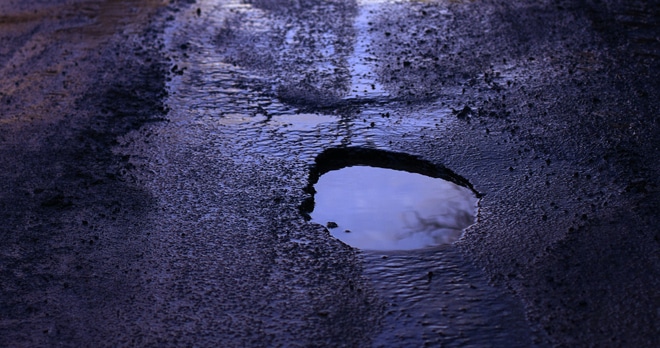
New guidance issued by the UK Roads Leadership Group (UKRLG) on maintaining our roads and pavements could be particularly important for vulnerable road users. Stuart Brazington, a partner in our Personal Injury team, explains why the updated Code of Practice has caught his attention.
A pothole that barely troubles a car can throw a cyclist from their bike. A raised paving slab that most of us would step over without thinking could cause someone using a walking frame to fall and suffer a serious injury.
Having spent much of my career representing people with serious brain and spinal cord injuries, I’ve seen how a split-second accident can change someone’s life.
So, I was interested to see the publication, on 14 October 2026, of an updated Well-managed Highway Infrastructure: A Code of Practice.
It’s not a document most people will encounter, but it provides important guidance to the authorities responsible for maintaining our roads, pavements and cycleways.
And there’s something in it that I particularly welcome.
Not everyone faces the same risks
One of the things my work has taught me is that we don’t all experience the world around us in the same way. Something that presents little difficulty to one person can be a considerable obstacle to another.
The updated Code recognises this, specifically identifying the differing needs of cyclists, older people, disabled people and those using mobility aids. It says highway authorities should consider those needs when developing maintenance policies and deciding what action to take.
Think about a pavement outside a care home, where residents may rely on walking frames, or a pothole on a busy cycle route.
Surely, when assessing how dangerous a defect might be, it makes sense to consider who is likely to encounter it?
The previous Code also recognised the needs of different road users, but I’m pleased to see this carried forward in the revised guidance.
When is a highway authority responsible for an accident?
Under the Highways Act 1980, highway authorities in England and Wales have a duty to maintain roads and pavements that are maintainable at public expense. But that doesn’t mean a council is automatically responsible whenever somebody trips over uneven paving or falls because of a pothole.
Generally, a claimant must establish that the highway was dangerous because it hadn’t been properly maintained and that this caused their injury.
Even then, the authority may have a defence under section 58 of the Act if it can show that it took such care as was reasonably required to prevent the highway from being dangerous.
That might involve demonstrating that it had appropriate inspection and maintenance arrangements and that these were properly followed. However, the law also requires consideration of the type of highway, who could reasonably be expected to use it and the appropriate standard of maintenance.
This is where the revised Code may prove useful.
Is carrying out regular inspections enough?
Highway authorities are expected to inspect their roads and pavements, identify dangerous defects and arrange repairs where necessary. However, what happens when someone is injured by a defect that wasn’t identified during an inspection?
The council might produce records showing that the pavement was inspected several months earlier and no problem was found.
Does that settle the matter?
Not necessarily.
I’d want to know whether the inspection arrangements were appropriate for that location. Was the inspector properly trained? Had anyone previously reported a problem? And had sufficient thought been given to the people using that pavement?
The updated Code emphasises sound judgement, reliable information and decisions that can be properly explained.
An inspection record is important, but it doesn’t always tell the whole story.
What if the problem had been reported before?
This is something I’d be particularly interested in when investigating a claim.
The guidance encourages highway authorities to learn from previous incidents, complaints and maintenance problems.
Perhaps residents have repeatedly reported an uneven pavement. Or a stretch of road has required frequent pothole repairs, particularly after bad weather. What did the authority know about those problems? Were they properly investigated? And was anything done to prevent them recurring?
The revised Code also recognises the importance of preventative maintenance rather than simply responding to defects after they develop.
Previous complaints or repairs won’t automatically establish liability. But they may help us understand whether the authority knew, or should reasonably have known, about a dangerous condition.
Could the updated Code help with compensation claims?
Potentially, yes.
The Code isn’t legally binding and doesn’t change the law. Much of its approach was already established in the previous edition, published in 2016.
However, it may help us examine whether a highway authority’s inspection and maintenance arrangements were reasonable, particularly where an accident involved someone vulnerable to a particular defect.
The revised guidance also recognises developments in technology, including digital highway surveys and artificial intelligence. Where authorities use these systems, the records they produce may help establish what was known about a defect before an accident.
If you’ve been injured, photographs of the defect, details of witnesses and evidence of your injuries can all be valuable. An experienced solicitor can also investigate the authority’s inspection records, maintenance history and previous complaints.
And don’t assume that because a council says it carried out regular inspections, there’s nothing more to investigate.
Why I welcome the updated guidance
I don’t expect the revised Code to transform highway accident claims overnight. But I welcome its recognition that the people using our roads and pavements have different needs and face different risks.
When someone suffers a serious injury because of a dangerous highway defect, we need to look beyond whether an inspection took place or a particular repair threshold was met.
We need to ask whether the authority’s approach was reasonable for that location and the people expected to use it.
After all, a pothole isn’t necessarily harmless just because most vehicles can pass over it without difficulty.
If you’ve been injured because of a pothole, uneven paving or another highway defect, our experienced personal injury solicitors can investigate what happened, including the highway authority’s inspection and maintenance records, and advise you on whether you may have a claim for compensation.
Call now