Building Safety – Hotels, Cladding and Commercial Leases: The Building Safety Net Widens

The Net Widens
A recent Technology and Construction Court decision is a timely reminder that building safety risk is not confined to residential buildings or to claims brought under the Building Safety Act 2022 (“BSA 2022”).
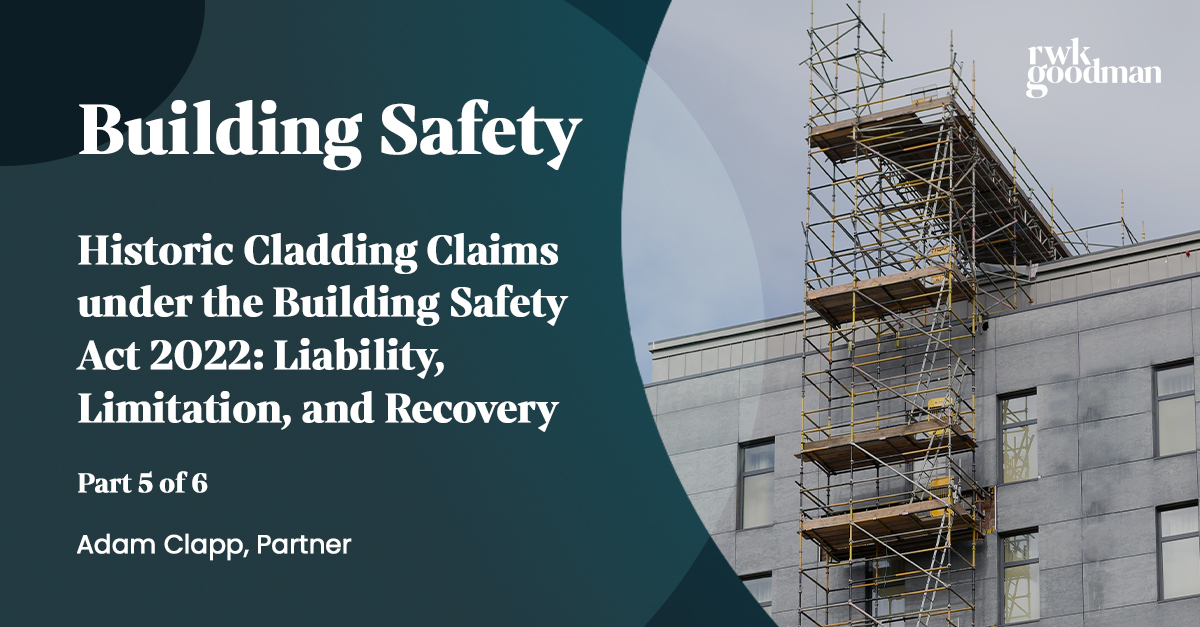
In Essendi UK Hotels 2 Ltd v London Property Company Ltd, the court held that a landlord was required to remove and replace dangerous ACM cladding from a hotel, notwithstanding that hotels sit outside key parts of the BSA 2022 remediation regime.
The case is important for landlords, tenants, investors, funders and operators of commercial and mixed-use assets. It shows that traditional contractual obligations in leases, including covenants to keep premises in good condition and to comply with legal obligations, may provide a route to require remediation of serious fire safety defects even where the statutory building safety regime does not directly apply.
The background
The dispute concerned a high-rise hotel in Wembley clad with aluminium composite material panels containing a combustible polyethylene core. Following investigations, the cladding was found to present a serious fire safety risk. The tenant sought to require the landlord to carry out the necessary remediation works.
The BSA 2022 did not provide the tenant with the same type of remediation route that may be available in relation to certain residential buildings. The tenant therefore relied on the terms of the lease, including the landlord’s obligation to keep the relevant parts of the building in good and substantial repair and condition, and its obligation to comply with legal requirements.
What did the court decide?
The court held that the landlord was in breach of its lease obligations. In particular, the obligation to keep the building in good condition was capable of extending to the removal and replacement of dangerous cladding where that cladding created a significant fire safety risk, even though the cladding had not necessarily deteriorated in the conventional sense.
The court also considered the interaction between the lease and fire safety obligations, including obligations under the Regulatory Reform (Fire Safety) Order 2005 (as amended) (the “Fire Safety Order”). The decision illustrates how a covenant to comply with legal obligations can have real commercial consequences where a building presents an unacceptable fire safety risk.
For commercial property owners and occupiers, the significance of the case lies in the court’s willingness to interpret lease obligations against the background of the post-Grenfell regulatory and safety environment. A covenant concerned with “condition” may not be limited to visible deterioration or physical damage. It may also capture serious safety defects that make a building unsuitable or unsafe for continued occupation.
Why this matters beyond hotels
Although the facts concerned a hotel, the wider lesson is relevant to other commercial buildings that may sit outside parts of the BSA 2022 regime. Hotels, student accommodation, care facilities, mixed-use assets and other commercial premises may still face significant building safety issues, even if the statutory remediation framework does not apply in the same way as it does to certain residential buildings.
Parties should therefore avoid assuming that exclusion from the BSA 2022 means exclusion from building safety liability. Contractual obligations, lease covenants, fire safety duties, insurance requirements and lender expectations may all create pressure to investigate, allocate and remediate building safety risk.
Practical implications for transactions and asset management
For transactions involving hotels and other commercial assets, due diligence should include a careful review of lease covenants, responsibility for structure and exterior, any cladding-specific provisions, historic works, fire risk assessments, building control records, insurance conditions and any communications with regulators or fire authorities.
Landlords should consider whether existing lease obligations could require them to investigate or remediate building safety defects. Tenants and operators should consider whether lease covenants may provide a contractual route to require action, particularly where continued occupation, trading, insurance or regulatory compliance is affected.
Conclusion
The decision is an important reminder that building safety risk is not confined to the express remedies introduced by the BSA 2022. For commercial property stakeholders, the key point is that established contractual and regulatory obligations may now be viewed through a sharper safety lens. The usual exemptions from the BSA 2022 now appear to be narrowing.
Lease covenants dealing with condition, repair, statutory compliance and use of the premises can become highly significant where fire safety defects affect occupation, insurance, financeability or asset value.
Set against the current public policy and the legislative landscape, which increasingly appears to extend liability for building safety, the practical message is to identify building safety risk early, map responsibility clearly across the ownership, landlord, tenant and operator structure, and ensure that lease drafting, due diligence and governance arrangements are robust enough to support timely remediation rather than leaving parties to resolve responsibility only once the risk has crystallised.