The Team Around the Client Magazine
October 2026 | Edition 21

A note from our Guest Editor
I first read Invisible Women by Caroline Criado Perez during lockdown. Like many people, I was probably reading more than usual at the time, but this book stayed with me. It showed how women’s experiences can be missing from research, policy, medicine and design because the default starting point has too often been male. I couldn’t stop talking about it and even started an ED&I book club at RWK Goodman just so I could persuade others to read it and discuss it with me.
Criado Perez was not describing abstract inequality; she was showing how gaps in data can translate into real physical harm. In injury prevention, she points to car safety systems historically designed and tested around male bodies, leaving women at greater risk of serious injury in car accidents. In medicine, she highlights how women have historically been excluded or under-represented in research, meaning that symptoms, drug doses, side effects and treatment responses have too often been understood through a male lens. The result is that women’s symptoms may be missed, misdiagnosed or minimised, and the care offered may not properly reflect women’s bodies or lives.
That initial interest has grown into something of a passion project for me. As a claimant personal injury solicitor, particularly working with people affected by brain injury, I see how symptoms can be misunderstood when the person does not fit the expected model. This edition of Team Around the Client brings together legal, clinical, charitable and lived-experience perspectives because no single professional sees the whole picture alone. The aim is not to reduce anyone to a category or suggest that experiences are the same for all women or all men. It is to ask whether we are properly understanding the person in front of us.
The articles in this edition approach that question from different angles: traumatic brain injury, caring responsibilities, French law, domestic abuse, prosthetic rehabilitation, bereavement, prison, major trauma and spinal cord injury. Although the subjects are different, the same concern runs through them all: whether sex, gender and intersecting experiences are being properly recognised when injury is assessed, treated, evidenced and compensated.
A number of pieces focus on problems that are easy to miss. Brain injury may go unrecognised in the context of domestic abuse or be misunderstood in prison. In major trauma, the warning signs may not fit the familiar picture of a young man involved in a high-energy accident. Elsewhere, the barriers are more practical: women with spinal cord injury may struggle to access routine healthcare, while prosthetic rehabilitation may need to take account of hormonal changes and the priorities of the individual rather than assumptions about what women want.
Other articles remind us that gendered expectations can affect loss in less visible ways. Caring responsibilities may be central to a claimant’s life but overlooked unless they are asked about and evidenced. In France too, sex and gender can affect the assessment and valuation of care, sexual harm and loss of earnings. Bereaved men may feel pressure to be stoic or to support others, making it harder to seek help for themselves.
The common thread is the need to ask better questions. What has been missed because the research default was male? What is absent from the records because someone was not asked, believed or able to access care? What loss is hidden because it is unpaid, intimate, domestic, emotional or bound up with identity?
These questions also lead naturally to intersectionality, which this edition can only begin to touch on. Sex and gender are never experienced in isolation: race, disability, gender identity, sexuality, class and age can all shape how injury is experienced, how symptoms are interpreted and how support is accessed. The stark inequalities shown in UK maternity data for Black women, and the barriers faced by LGBT+ people, and trans people in particular, when services fail to recognise their identity, relationships or needs, are just two examples of why this matters. They remind us to keep asking who is being heard, who is being believed, and whose experience may still be missing from the evidence.
I am very grateful to my RWK Goodman colleagues who have contributed to this edition, and to our external contributors for so generously sharing their expertise, experience and perspective. Together, they have helped build a collection that reflects what Team Around the Client is ultimately about: bringing different voices together so that the person at the centre is better understood.
This edition does not suggest that sex or gender determines anyone’s experience. Instead, it asks us to be more curious and person-centred in the way we approach injury, rehabilitation and litigation. Every part of the team around the client has a role in understanding the real person: their body, identity, family life, work, safety, relationships, responsibilities and access to services. If we listen properly, the evidence is better, the support is more meaningful, and the person is less likely to disappear behind a default model that was never designed for them.
Charlotte Webb, Senior Associate and Guest Editor of this Edition of Team Around the Client.

Traumatic brain injury: why sex and gender differences matter
Brain injury affects every person differently, yet much of our understanding has historically been shaped by research centred on men. In this article, Charlotte Webb, Senior Associate, explores how sex and gender can influence injury risk, symptoms, recovery and rehabilitation – and why looking beyond the traditional default matters.

Caring responsibilities in personal injury claims: The courts' approach
In this article, Sarah Prager KC, Barrister at DEKA Chambers, examines how the courts approach claims arising from an injured person’s loss of ability to care for others. She explores the key legal principles, recent developments and practical steps practitioners can take to ensure this is properly evidenced and valued.

Sex and gender differences in personal injury in France
In this article, Maud Lepez, Partner, examines how sex and gender may affect personal injury compensation in France. Drawing on recent case-law analysis and wider research, she considers differences in awards for sexual harm, aesthetic damage, care and loss of earnings – and asks whether unconscious assumptions can influence how claims are investigated and valued.

The hidden impact of brain injury in domestic abuse
Charlotte Webb and Headway London explore the often-overlooked link between domestic abuse and brain injury, why these injuries can be difficult to recognise, and how Headway London’s new Domestic Violence Support Pathway aims to connect survivors with appropriate, specialist support.

Women and prosthetic limb use: A clinical perspective
Katy McIntosh, Clinical Manager and Clinical Specialist Prosthetist at Proactive Prosthetics, explores the particular considerations women may face when using a prosthetic limb, from hormonal changes and pregnancy to balancing rehabilitation with everyday life.

Let’s talk bereaveMENt: Why focusing on bereaved men matters
Becky Randel, Associate, and Adam Bate from 2wish introduce the charity’s Let’s Talk BereaveMENt campaign, exploring why men’s experiences of grief may receive too little attention and how open conversations and specialist support can help bereaved fathers and other men feel less alone.

The invisible injury behind the prison door
Stuart Brazington, Partner, explores how brain injury affects women in prison, why its symptoms can be mistaken for difficult behaviour, and how better recognition and informed support could improve outcomes.

Major trauma: Are women receiving the same response?
We are joined by Dr Sophie Hart who examines whether women and men with major trauma receive the same response, drawing on her research into differences in trauma recognition, triage and specialist team involvement.
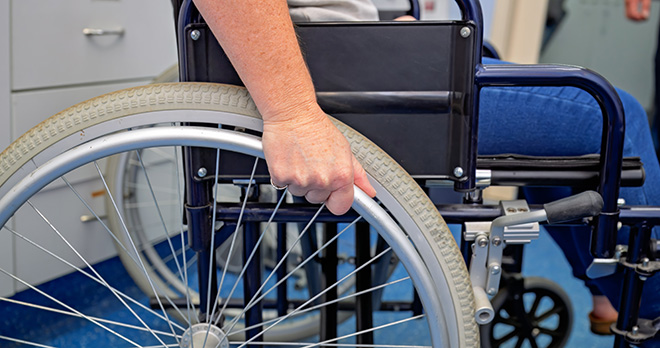
Spinal cord injury: when routine healthcare isn’t routine
Charlotte Webb explores the barriers women with spinal cord injury can face when accessing routine healthcare, why sex and gender matter, and what more inclusive care means in practice and in serious injury claims.