£5.6 million lump sum and lifelong payments secured for young woman left paraplegic following scoliosis surgery

Head of Medical Negligence Simon Elliman secured a £5.6 million lump sum and lifelong annual payments for a young woman left permanently paraplegic following scoliosis surgery.
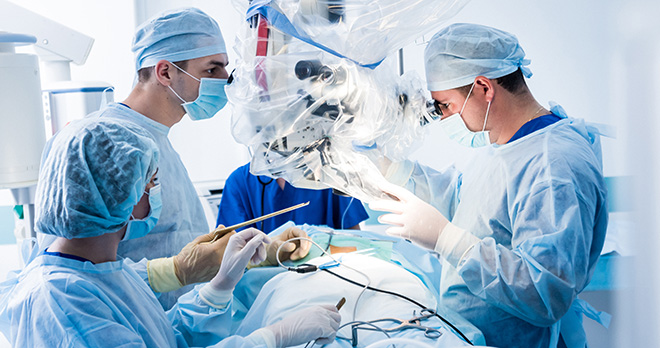
Our client was just 16 when she underwent surgery intended to correct scoliosis and address the significant back pain she had begun to experience. By the end of that day, after a second emergency operation, she was unable to move or feel any part of her body below her upper chest.
She was left with permanent paraplegia and is now a full-time wheelchair user. She has no useful movement in her legs and no control of her bladder or bowels.
RWK Goodman secured a lump-sum settlement of £5,628,510, together with annual periodical payments for her care and case management for the rest of her life. The claim settled in January 2024, when she was 26.
Read more about making a claim following negligent scoliosis surgery.
What happened
Our client was diagnosed with mild scoliosis in 2012. During the following year, she began to experience significant back pain and was referred to orthopaedic and spinal surgeons, who advised her to consider surgery to correct the curvature of her spine.
She was admitted to Evelina London Children’s Hospital and underwent scoliosis correction surgery on 1 August 2014.
Her blood pressure fell before the operation began and intravenous fluids were administered. Although it initially recovered, her blood pressure remained unstable.
Spinal cord monitoring was carried out during the procedure. The sensory responses were described as well formed, but the motor responses were very small and unreliable.
After the first incision, her blood pressure fell again. She subsequently experienced significant blood loss and periods during which her blood pressure remained below the intended target.
Following surgery, she was transferred to the Paediatric Intensive Care Unit, where there was another episode of hypotension. Her haemoglobin level fell significantly and staff had difficulty waking her.
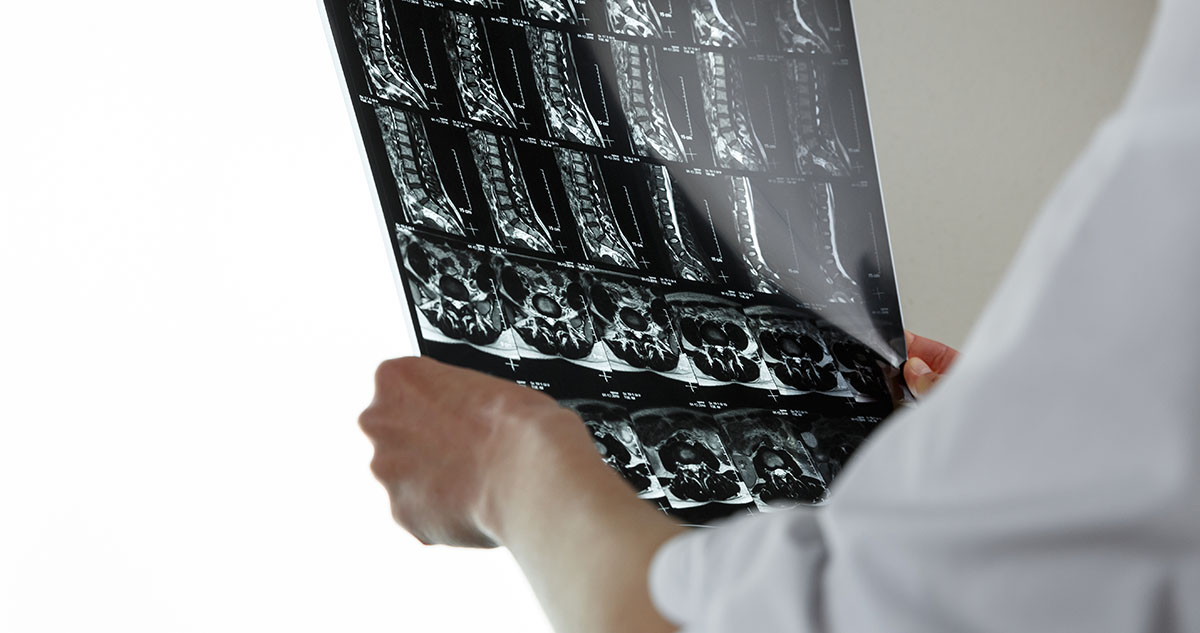
When she began to regain consciousness, it became apparent that she was not moving her legs. An urgent MRI scan was arranged, which showed anatomical distortion at the T5 and T7 levels of her thoracic spine.
Although the scan did not reveal a clear cause for the neurological loss, emergency surgery was advised to remove the metalwork and release tension within her spine.
She returned to theatre that evening. A cerebrospinal fluid leak was noted during the second operation and the metalwork was removed. There was no improvement in her condition: she remained unable to move or feel any part of her body below her upper chest.
A third operation was carried out on 20 August 2014 to replace the metalwork and stabilise her spine.
Rehabilitation and lasting disability
Our client was transferred to the Royal National Orthopaedic Hospital for specialist rehabilitation on 8 September 2014.
During rehabilitation, she regained a very small amount of movement in her legs, but not enough to provide any useful or functional movement. She was discharged on 17 December 2014 with T8 incomplete ASIA B paraplegia.
Her physical condition is permanent. She cannot walk or stand and is entirely dependent upon a wheelchair.
She has no control of her bladder or bowels and experiences significant spasms. She also lives with pain affecting her shoulders, neck, back and legs.
The psychological impact has been considerable. Alongside adjusting to a profound and permanent physical disability, she has had to come to terms with the effect of the injury on her independence, education and future plans.
Her absence from college and the consequences of her disability meant that she could not follow her intended career path. She requires help with day-to-day activities, and the level of assistance she needs is expected to increase as she grows older.
The medical evidence also indicated that her injury was likely to reduce her life expectancy.
The claim
The claim arose from the care our client received during and immediately after the scoliosis correction procedure. The evidence considered matters including the management of her blood pressure and blood loss and the response when concerns arose about her neurological condition.
A settlement meeting dealing with liability took place on 24 March 2021. Liability was resolved on an 85/15 basis in our client’s favour, and judgment was entered by an order dated 11 August 2021.
Extensive expert evidence was then obtained to assess the many consequences of the injury and the financial support she would require throughout her life.
The case was listed for an eight-day trial on the amount of compensation, beginning on 1 February 2024. A settlement was instead reached at a meeting on 8 January 2024, avoiding the need for the trial.
The settlement
Our client received a lump sum of £5,628,510.
She will also receive annual periodical payments towards the continuing cost of her care and case management. These are payable at the following rates:
- £23,000 a year until the age of 45;
- £35,000 a year between the ages of 45 and 55;
- £89,000 a year between the ages of 55 and 65; and
- £109,000 a year from the age of 65 for the remainder of her life.
The lump sum included £320,000, including interest, for her pain, suffering and loss of amenity.
The compensation also reflected the extensive financial consequences of her injury. These included the cost of suitable accommodation, assistive technology, specialist equipment, medical treatment, therapy, transport and incontinence products, together with her expected loss of earnings and pension.
Compensation cannot undo what happened or give our client back the opportunities she lost. It can, however, provide lasting financial security and ensure that her accommodation, care, treatment and support can change with her needs throughout her life.
Concerned about a spinal injury following surgery?
If you or a family member suffered a spinal cord injury following surgery and are concerned that something may have gone wrong, our specialist medical negligence solicitors can help you understand what happened and whether you may be entitled to compensation.
If you have suffered life changing injuries as a result of substandard care for cauda equina syndrome, our specialist lawyers are here to help. Contact our enquiries team to find out more about your options.
Call now
Discover our spinal injuries expertise.

More insights from our cauda equina syndrome experts.


View more articles related to Cauda equina claims