Seven figure settlement for a man who lost an eye after workplace accident
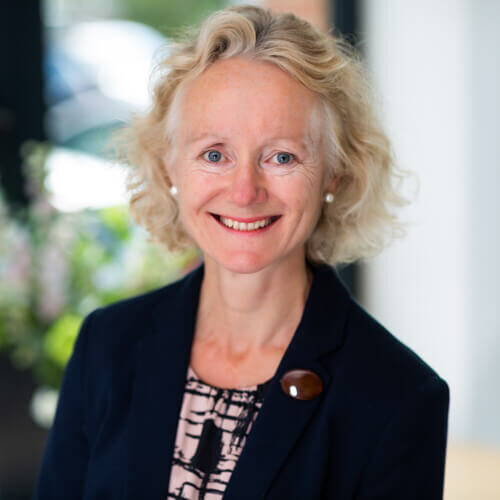
Louise Smith explains how a workplace accident claim that initially appeared difficult in terms of liability ultimately resulted in a full admission of liability and a seven-figure settlement.
When this case first came to us, this looked very far from straightforward.
In early 2023, our client Peter Middleton suffered a catastrophic injury while carrying out what appeared to be an ordinary gardening task at work. A rose branch sprang back and struck him in the eye. There was no fall from the ladder or defective equipment. The immediate cause could easily have been dismissed as an unfortunate accident. But in that fraction of a second, his working life and independence changed.
He lost the sight in his right eye and eventually underwent surgery to remove it. Because he already had very poor vision in his left eye, he was left severely sight impaired.
Following a detailed investigation, we secured a full admission of liability. The claim ultimately settled for a seven figure sum.
A familiar task with hidden risks
Mr Middleton worked as the manager of a private estate. Although he was not employed as a gardener, he was sometimes expected to help with gardening work.
One task involved pruning a large climbing rose that was trained against the side of a house and reached roughly 15 feet above the ground. He used a three-part extending ladder while a colleague stood below, footing it and directing the pruning.
The arrangement left him holding the ladder with his left hand and using secateurs with his right. He had no free hand to control the branches and had to work very close to the dense growth.
He had previously asked for a tripod or A-frame ladder, which would have provided a more stable platform and allowed him to use both hands. His requests were refused. He had also received no training in working at height, had not been shown a risk assessment and had not been provided with safety glasses or goggles.
Why the claim initially appeared difficult
We knew that liability might be contested. The insurer could argue that the branch had moved unpredictably, that the accident was simply a matter of bad luck or that he should bear some responsibility.
However, we believed that the crucial question was not simply why the branch had moved, but why he had been placed in a position where a routine movement could cause such serious harm. We examined the choice of ladder, the fact that he had to work with only one hand, his previous requests for safer equipment, and the absence of training, a risk assessment and eye protection.
Even so, the barrister we initially approached was not confident that the claim would succeed and declined to act under a conditional fee agreement, commonly known as a “no win, no fee” agreement. We did not give up and found another barrister, Michelle Marnham, who was prepared to take the case forward on that basis.
After gathering the evidence and setting out the case in a detailed letter of claim, we secured a full admission of liability from the employer’s insurer. No allegation of contributory negligence was pursued—the insurer did not suggest that he bore any responsibility for the accident.
Losing the eye he relied upon
Mr Middleton suffered a penetrating laceration to the cornea and underwent emergency surgery that day. Despite several further procedures, his sight did not return. He continued to experience pain, watering, swelling and migraines.
Doctors eventually advised that further attempts to save the eye would not restore his vision or resolve his symptoms. In 2025, his right eye was removed, and he began the process of being fitted with a prosthetic eye.
The loss was especially devastating because his left eye had always been affected by severe myopia and amblyopia. Before the accident, this had little practical impact on his daily life, as he relied almost entirely on his healthy right eye. Afterwards, he was forced to depend on the limited vision in an eye that his brain had never adapted to using effectively.
He was registered severely sight impaired, could no longer drive and was unable to return to most of his previous work.
The impact reached far beyond his eyesight
Mr Middleton also developed post-traumatic stress disorder and experienced a period of major depression. He struggled with his changed appearance, the loss of his working identity and his increased dependence on other people.
He tried to return to work on a limited, part-time basis, but his physical and psychological symptoms made that unsustainable and he eventually resigned.
His home was tied to his employment, so losing his job also meant losing his accommodation. His partner (now his wife) worked for the same employer and also had to leave her role and their home. The consequences affected almost every part of their shared life.
He required care, specialist equipment and suitable ground-floor accommodation, together with ongoing eye care and psychological support.
Building a claim around the whole person
A serious injury claim cannot be valued by looking at a diagnosis alone. We had to understand his life before the accident, what he had lost and what he would need in the future.
A team of expert witnesses was required to build the claim, while the defendants instructed seven experts of their own. The expert evidence addressed his eyesight, psychological injury, care, accommodation, specialist equipment needs, earning capacity and life expectancy.
Only days before a joint settlement meeting, the defendants served evidence raising substantial new issues about his left eye. Understandably, Mr Middleton wanted to challenge it, but he also wanted certainty and the opportunity to bring years of surgery and litigation to an end.
A related case study on the impact of early rehabilitation after a workplace accident also shows why serious injury claims must look beyond the immediate physical injury and consider the person’s independence, work and future quality of life.
A settlement that allowed him to move forward
The claim settled in July 2026. Although no amount of compensation could restore his sight, the settlement was intended to provide financial security and meet the losses and needs caused by his injuries, including past and future loss of earnings, care, suitable accommodation, equipment, treatment and future support.
It was also a figure he felt he could live with. After so much uncertainty, it gave him the closure he had been seeking.
Why difficult cases deserve a closer look
This case is a reminder that an unfavourable initial assessment should not always be the end of the road.
We cannot promise that every difficult claim will succeed. What we can do is investigate every claim properly, ask the right questions and avoid judging a case solely by the split second in which the injury occurred.
Here, the branch striking his eye was only the last event in a longer chain. The real issues lay in the planning of the task, the equipment provided and the absence of basic protective measures.
By uncovering that fuller picture, we secured an admission of liability and a settlement that will help protect him and his wife in the years ahead.
If you have suffered avoidable harm, our specialist personal injury team is here to help.
Ask us a question