£120,000 compensation after negligent caesarean section caused cardiac arrest and necessitated a hysterectomy

Sophie Angwin-Thornes in our specialist maternal injury claims team describes how an NHS Trust admitted serious failings in her client’s care, which had life-changing consequences.
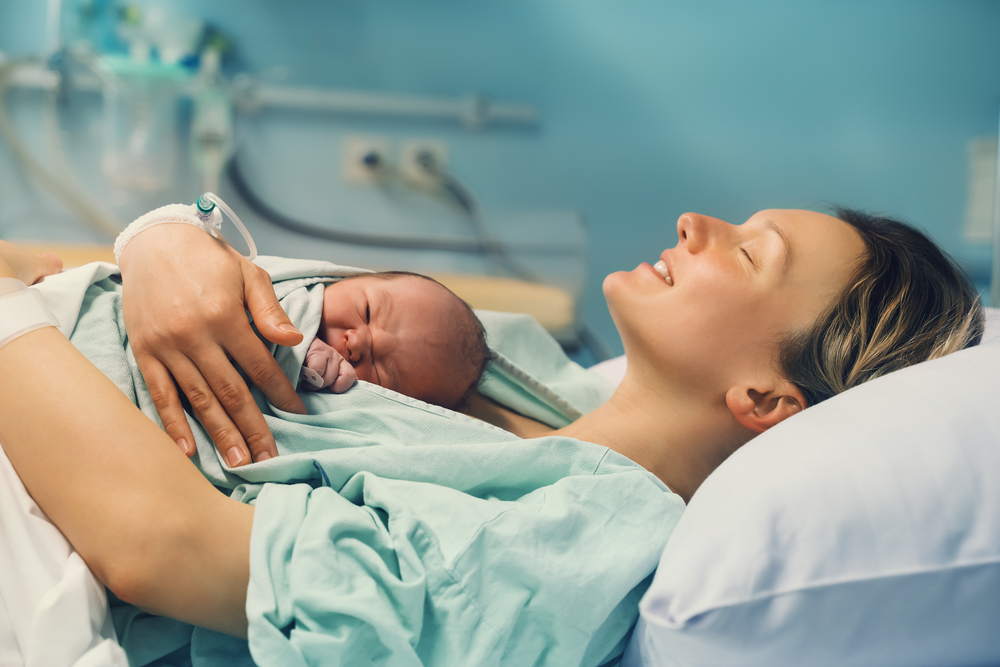
Our client remembers her newborn daughter being placed on her chest. Then she began to feel numb and weak. She could not grip her baby.
“I thought I was dying,” she told her partner.
Minutes later, she suffered a cardiac arrest.
What should have been the beginning of life with her third child instead became a fight for her own life. She needed emergency surgery, blood transfusions and intensive care. The following day, after further serious bleeding, surgeons performed a subtotal hysterectomy.
A planned caesarean section
Our client already had two children, both born vaginally. Her third pregnancy required careful monitoring because of high blood pressure.
At 38 weeks she was admitted for an intended induction. An ultrasound showed that her daughter was lying transversely – across the womb rather than head down. Doctors considered trying to turn the baby, but when our client began experiencing contractions the decision was made to deliver by caesarean section.
During the operation, the surgical team saw large, engorged blood vessels on the lower part of the uterus. Surgery was paused and a consultant obstetrician was called. The consultant advised where the incision should be made in an attempt to avoid the vessels.
Her daughter was delivered safely. Estimated blood loss was recorded as 450ml.
But something important had been missed.
What went wrong during the caesarean section?
Our client’s uterus had rotated very substantially to the right, known medically as dextrorotation. That abnormal position was not recognised. The incision believed to have been made at the front of the uterus was actually on its posterior, or back, surface.
There was another clue. Our client had previously had her right fallopian tube removed after an ectopic pregnancy. Yet the caesarean operation note recorded a previous left-sided salpingectomy. Our case was that this discrepancy should have alerted the surgical team to the abnormal anatomy.
Our independent expert evidence supported our case that the consultant should have become actively involved once the unusual anatomy was encountered and that the pelvis should have been properly examined. Had that happened, our case was that the rotation would have been identified.
“I thought I was dying”
Our client’s memories of what happened next are fragmented, but those she does have are vivid.
After her daughter was placed on her chest, she felt increasingly weak. She told her partner she could not breathe and asked him to take the baby. Her last clear memory was asking for a glass of water.
Within four minutes of arriving in recovery, she collapsed. Her pulse became absent and CPR was started. Her circulation returned after one cycle of resuscitation.
There was little external bleeding, but she had suffered a major internal haemorrhage.
She later described disturbing memories from when she was critically ill, including the sensation of hands pressing down on her chest. Those memories continued long after she left intensive care.
Emergency surgery and a hysterectomy
Later that evening, investigations raised concern about bleeding inside her abdomen and she was taken back to theatre for an emergency laparotomy.
Surgeons found a large haemoperitoneum – a significant collection of blood in the abdominal cavity – and a haematoma. They also discovered that the caesarean incision was on the back of the uterus, confirming the severe rotation.
The bleeding was treated and our client was transferred to intensive care. She was not reviewed by the obstetric team overnight for more than ten hours.
The following afternoon she returned to theatre. When the abdominal packs were removed, heavy bleeding began again and surgeons performed a subtotal hysterectomy.
She also developed kidney problems and required renal replacement treatment. More than two weeks passed before she was discharged from hospital.
What the NHS Trust admitted
A catastrophic outcome does not, by itself, establish clinical negligence. We needed expert evidence to identify where the care had fallen below an acceptable standard and what difference those failings had made. Our guide to breach of duty and causation in clinical negligence claims explains this in more detail.
In its formal Letter of Response, the Trust admitted four of the six allegations of breach of duty. These included failings in the consultant’s involvement during the caesarean section, the failure to identify the dextrorotation and properly examine the pelvis, the failure to arrange immediate surgical management after our client collapsed, and the lack of obstetric review for more than ten hours after the first laparotomy.
The Trust denied two allegations concerning the management of that first emergency laparotomy.
Crucially, it admitted causation. It accepted that, without the admitted breaches, our client would have avoided the cardiac arrest, return to theatre, hysterectomy and admission to intensive care.
The Trust also acknowledged that mistakes had been made and apologised.
Living with what happened
For our client, surviving was only the beginning.
She had breastfed her older children but was too weak after the haemorrhage and surgery to breastfeed her new daughter. When she came round in intensive care, she did not initially remember that she had undergone a hysterectomy.
At home she was exhausted and, in her own words, “looked like a ghost”. Looking after a newborn was extremely difficult and she needed considerable help from her family and a friend. For around six months she slept downstairs because she could not manage the stairs.
She continued to experience pain around her abdominal scars, weakness, breathlessness, dizziness and low energy. She took around a year away from her work as a cleaner and later returned on reduced hours.
There was a psychological legacy too. She described intrusive memories and fear of going to sleep because she thought she might die. Even tight clothing around her chest could bring back memories of being resuscitated.
Perhaps the most permanent consequence was one she expressed simply:
“I had always wanted six children,” she said. “That opportunity has been taken from me.”
How we secured the £120,000 settlement
We obtained independent expert evidence to consider what should have happened during our client’s care, whether the failings identified had caused her injuries, and the physical and psychological consequences she was left with.
The claim also took account of the financial impact of her injuries, including the care and assistance she had needed, her loss of earnings and the cost of future treatment.
Following the Trust’s admissions, our client accepted an offer of £120,000, bringing the claim to an end without the need for a trial.
The settlement reflects the lasting impact of what our client went through and will also help towards specialist psychological treatment and further surgery.
What this case shows about caesarean section negligence claims
A serious haemorrhage or other complication after a caesarean section does not necessarily mean that somebody was negligent. The important questions are what should have been done differently and whether that would probably have changed the outcome.
For our client, independent expert evidence helped us establish both. The Trust ultimately accepted that specific failings had caused avoidable, life-changing harm.
If you believe something may have gone wrong during pregnancy, labour or a caesarean section, our maternal injury specialists can review what happened and explain whether further investigation may be appropriate.
You can also read our guide to making a medical negligence claim for more information about how clinical negligence claims work.
If you have suffered injuries as a result of substandard maternal care, our specialist lawyers are here to help. Contact our enquiries team to find out more about your options.
Call now
Discover our maternal and birth injuries expertise.



View more articles related to Birth Injury and Maternal injury