Everybody’s talking about weight loss injections – here’s what you need to know

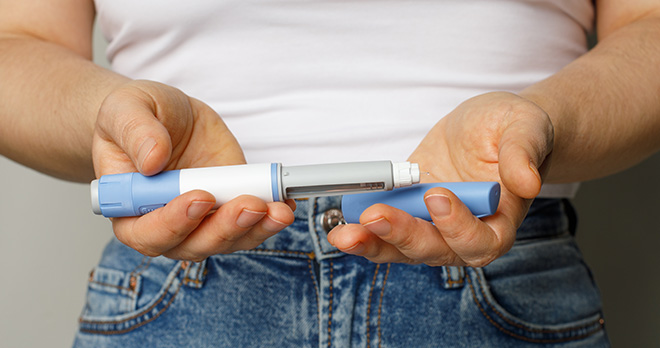
It seems too good to be true – a regular injection could change your life, your body, your health, the way you see yourself and how others see you. It’s hard to avoid stories of dramatic weight loss online, on the TV and in magazines. But are weight loss injections like Mounjaro and Wegovy the straightforward answer to our prayers?
At the time of writing this, it’s estimated that around 2 million people in the UK are currently using this medication and this is expected to rise to around 3.5 million in the coming year. However, the vast majority of people injecting these meds are paying privately for them. They’re not cheap. Weight loss injections commonly cost around £200 a week – that’s a big dent in most people’s pay packets. Pension companies are now even warning that longer life expectancies could affect the amount annuities pay out each year. Okay – so a longer life is obviously good news, but also something to think about when making arrangements for your later years. It seems the impact of these new drugs could be far reaching.
Much has been written about the availability of these injections – or lack of it – on the NHS. As ever, the NHS has to consider cost implications carefully. Therefore, similar criteria apply to these prescriptions on the NHS as to the availability of weight loss surgery via a publicly funded route. Typically, to be considered for NHS access to weight loss injections, patients would need to have a BMI of at least 35 or 30 in conjunction with another condition like hypertension, cardiovascular disease or type 2 diabetes for Wegovy or Ozempic. The criteria are slightly different for Mounjaro, requiring a BMI of at least 30, or 27 with prediabetes, high blood pressure, high cholesterol or heart problems. However, due to high demand, it is becoming clear that unless you have a BMI of upwards of 35, it may be very difficult to get this treatment on the NHS.
So before you hand over your hard-earned cash for privately funded injections, there are some important things you need to know. We spoke to Dr Affifa Farrukh, Consultant Gastroenterologist about some very important factors that should be taken into account if you are considering using this medication.
How do weight loss injections work?
They are typically GLP-1 analogues which suppress appetite by mimicking the feeling of fullness experienced after eating. Semaglutide (sold as Ozempic and Wegovy) also stimulates the release of insulin and slows stomach emptying. However, Ozempic is licenced in the UK for the treatment of type 2 diabetes only, rather than weight loss. Tirzepatide (sold as Mounjaro) acts in a similar way but is also a gastric inhibitory polypeptide (GIP) agonist, which means it produces greater reductions in high glucose levels.
How successful are weight loss injections?
Early trials of Semaglutide reported a 12-15% weight loss over 68 weeks. Amongst the largest studies of Tirzepatide, over 72 weeks, people on 5mg lost 16% of their weight, those on 10mg between 13% and 21% and for those on 15mg, 16-22%. People are individuals however, so the amount of weight loss achieved will depend on the patient’s particular health picture.
How should I prepare for a course of weight loss injections?
It’s vital to understand that these prescriptions act as part of a wider health and fitness programme. To get the best out of them, you will need guidance on a low-calorie diet and an exercise programme – and they are not a short-term fix. Typically, they need to be taken for a year or more, maybe even longer. This makes the source of your medicine critical. If you’re tempted to purchase via social media, you should think again. The Medicines and Healthcare products Regulatory Agency (MHRA) recently stated concerns that this would be the next big market in fake medication. Initial indications are that counterfeit weight loss injections may contain some of the right active ingredients but not in the recommended quantities. It is therefore essential to buy from a trusted source that can guide you on your weight loss journey and help to titrate your dose appropriately. Your dose should increase in a controlled manner in step with the diet and exercise plan you are given and you should be guided at every point by an appropriately qualified professional. It’s also worth noting that drinking alcohol whilst taking this medication carries significant risks. It can affect your toleration to alcohol and can also cause unpredictable fluctuations in blood glucose levels, including hypoglycaemia, which in itself can cause unconsciousness. Long-term alcohol use can decrease the effectiveness of both types of weight loss injections and increase the risk of alcohol and diabetes-related complications.
This is not a plan that you should be embarking on alone and it seems that even online pharmacies are variable in the quality of advice they provide.
Will I keep the weight off after my course of injections has finished?
Once your course is complete, evidence indicates that most people will start to gain weight again quite quickly. Again, this is where professional guidance is so important. The diet and exercise plans are not just for the duration of your course of treatment; they are designed to bring about lifestyle change. New research indicates that after stopping injections, patients regain weight 4 times faster than those who have followed traditional diets. With synthetic GLP-1 analogues flooding our systems, there is now a question mark as to whether long-term use actually reduces the body’s own capacity to produce these enzymes naturally. More research will be needed to establish whether this is the case.
Modern life is challenging our bodies in new ways. Many of us sit behind a desk all day at work and are time poor during the remaining hours. The convenience of ready prepared food is all too obvious but we know that many of the foods we eat are specifically designed by the companies that make them to stimulate human appetite. In a recent BBC interview, Consultant Endocrinologist Professor Alex Miras described obesity as “a disease of appetite”. Without assistance to reduce this, appetite simply returns as before. The rise we see in the incidence of obesity in Western economies is clearly more about environment than willpower.
What are the side effects of these injections?
Many people – up to 80% of patients – will experience gastrointestinal symptoms such as nausea, vomiting, diarrhoea and sometimes constipation. Although in many cases these symptoms gradually improve with long-term use, some people do find that they cannot continue with their course. In June 2025, the MHRA and Genomics England began a study into the incidence of acute pancreatitis in patients using weight loss injections. Although the link between use of the injections and this serious complication remains unclear, patients are encouraged to report any occasions where they have been hospitalised with acute pancreatitis via the Yellow Card website. The plan is to test these patients for a common genetic link which may make them more prone to this complication. Pancreatitis is a life-threatening condition and a number of media outlets have referred to the possibility that several deaths could be related to weight loss injections. Semaglutide therapy has also been linked to acute kidney injury, acute gallbladder injury, ischaemic optic neuropathy and diabetic retinopathy and will interact with drugs used in diabetes treatment, such as Metformin, as well as anti-psychotics. Similar issued have been reported with Tirzepatide.
Are these injections an alternative to weight loss surgery?
Yes, they can be and are clearly a less invasive option. They can also be used in preparation for weight loss surgery for those who require a more permanent solution. In limited situations they can also be used after weight loss surgery, namely when patients regain weight over time and to combat additional problems like diabetes. Following weight loss surgery, they should never be used without medical recommendation.
Are there any medical conditions that would prevent me using weight loss injections?
Semaglutide should not be taken if you have:
- a personal or family history of medullary thyroid carcinoma;
- a personal of family history of multiple endocrine neoplasia syndrome type 2;
- although not strictly a medical condition, you should not take this medication if you are pregnant.
It is likely that this would also apply to Tirzepatide.
What if I’m scared of needles?
The US Food and Drug Administration (FDA) recently approved a daily Wegovy pill. It has been designed to bring comparable weight loss benefits to patients without the need to inject the medication. It’s worth noting however, that to be effective, the dosage is higher than that of the injections in order to get past enzymes in the stomach which dissolve the majority of the active ingredient. Once again, the majority of people who choose this option is likely to be paying for it privately.
All in all, these new medicines are welcome in the challenges that excess weight bring. After all, we know that our weight has implications for our health in so many ways, both physical and mental. However, as with weight loss surgery, they will not be effective without sustained lifestyle changes. Those of us who feel as if we are in a constant battle with the bathroom scales now have an effective weapon in our arsenals but we will need careful guidance on how to use it.
Weight loss drugs and clinical negligence
It’s notable that we don’t yet know what the effects of long-term use will be on patient health (and it looks increasingly likely that patients will need to commit to prolonged use to maintain a healthy body weight). However, there is a duty on suppliers and practitioners to make their patients fully aware of potential serious side effects and what they should do in the event that these transpire. It is always important to be mindful of risks when taking medication.
All clinical negligence cases must prove a breach of duty on the part of the Defendant and causation. In other words, the treatment received by the Claimant must fall below the reasonable standard provided by a body of similarly qualified professionals. Once a breach of duty is identified, there must be a clear link to causation. This means that Claimants must prove that they have suffered injuries that they would have avoided had it not been for the identified breaches of duty. The duration of injuries and their effect on the life of Claimants may be variable and this would in turn influence the value of any claim.
This area of weight loss management is a new one and, as such, it’s unclear as to the nature of any clinical negligence claims against suppliers/practitioners which may emerge in time.
If you feel you may have experienced sub-standard care, do contact one of our specialist lawyers who will be able to advise you further.
Call us