Horse care after you have died

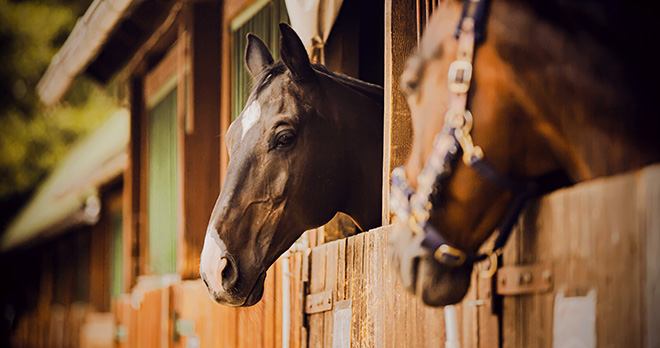
If I die, what will happen to my horse?
Organising for the care of other pets, such as dogs and cats, can take time to plan, but horses take even more consideration. Do you have people in mind with a keen interest in horses, available funds, time, or space to take on such a responsibility? Is it them who automatically inherit my horse?
Is my horse considered a taxable asset for inheritance tax after I die?
As with all your chattels, yes, a horse must be valued on your death and considered as an asset of your estate. It may be that your estate will have to pay inheritance tax. Your personal representatives (executors or administrators) should obtain a professional market valuation of your horse at the date of death.
In law, what type of asset is a horse deemed to be?
Unlike a bank account, stocks and shares, property and investment products, people may overlook your horse. It is normally considered a ‘personal chattel’ unless they are a working animal that might be regarded as a business asset. When a horse is used for breeding, training, racing, generating income, or selling as part of a commercial enterprise, it’s usually treated as a business asset.
There is a statutory definition, contained at section 55(1)(x) of the Administration of Estates Act 1925, which charmingly describes what a chattel is and this includes ‘carriages, horses, stable furniture and effects, motor cars and accessories, garden effects, domestic animals, plate, plated articles, linen, china, glass, books, pictures, prints, furniture, jewellery, articles of house or personal use or ornament, musical or scientific instruments and apparatus, wines, liquors and consumable stores, but do not include any chattels used at the death of the intestate person for business purposes, nor money or securities for money. This was updated by Section 3 Inheritance and Trustees’ Powers Act 2014 for a more modern definition that covers all ‘tangible movable property’. The starting point for the majority of people is that your horse is your chattel.
What happens to my horse if I don’t have a Will?
If you die without having made a valid Will, all of your estate, including your personal chattels, passes in accordance with statutory rules that govern the administration and distribution of a person’s estate, called dying “intestate”. Here is a link to our flowchart as to how your estate would be divided if you die intestate. You can’t override the statutory distribution of your estate, so making a Will would be especially important if people who feature on the flowchart are people you would not like to become responsible for your horse.
Risking your horse being passed to relatives under intestacy is never a prudent plan, so making a Will and providing structure and guidance is vital.
What if I don’t mention my horse in my Will?
If chattels are not specifically addressed in a clause in your Will, they become part of the overall residuary estate and will be distributed according to the stated instructions. This approach may introduce complications and delays in the administration process and leaves your horse somewhat in limbo until matters are sorted.
Is a Will the best way to protect my horse?
The best way to plan for your horse is indeed to write a clear Will. You then have certainty over how the horse will be cared for, and by whom, after you have gone.
There are various Will drafting options and you will need to ensure there is adequate financial provision. Horses can live for thirty years plus. A couple of simple options are:
- The horse is left to a named individual (#ID1), together with a cash sum, with a request (a wish, rather than strict instruction) that they take the horse and the cash in accordance with a private side letter of wishes. The cash sum is intended to assist with the costs of looking after the horse. You will need to name a replacement recipient (#ID2) of the horse if the #ID1 is unwilling or unable to care for the horse. People can die before you or lose physical or mental capacity. Their own set of circumstances may alter dramatically over time too, so make sure you change your will if this happens.
- The horse and a cash sum are left to a named individual (‘#ID1) on condition that they must undertake to care for the horse. If the recipient does not or cannot do this, the horse and the cash sum would pass to a replacement individual (#ID2). Sometimes this option is difficult for your personal representatives to police.
It is key to remember that any specific reference to a named horse in a Will would mean that if the horse dies during your lifetime, that gift will fail. It is important that you update your Will if a ‘replacement’ horse or an additional horse is acquired during your lifetime. Alternatively (which is widely recommended for flexibility), the Will is drafted broadly enough to ensure any ‘substitute’ horse is expressly covered. Otherwise, any ‘replacement’ horse would form part of your residuary estate.
If there is no appropriate individual, the horse and a cash sum are left to an appropriate charity with a direction that the charity find the horse a home. World Horse Welfare runs an equine rescue and rehoming scheme. Also Rehoming – The Horse Trust.
Can a trust structure be useful?
Yes, a trust (as an entity of its own) can own a horse, but there is a practical issue to consider: who is actually caring for its welfare on a daily basis?
What works well is to have a separate trust to hold money to invest and generate capital growth and income to be utilised for the horse care. For example, you could have a discretionary trust run by trustees containing an initial set amount. The potential beneficiaries will include the person you primarily hope will care for your horse (#ID1) and fallback carers (#ID2, 3 etc), if that first choice is unable or unwilling. A backstop beneficiary could include a charity.
The trustees can settle expenses directly with vets, a livery, transport provider and so on. The trustees could hold the purse strings and hire help to look after your horse.
By searching the Charity Commission website for the objects “horse welfare” you can peruse over 23,000 charities and narrow down using filters. You may want to leave direction that if any capital or income remains unused in the trust, one or more horse charities are appointed the remaining funds.
A private letter of wishes to your Will (in whatever format Will you are advised to follow) is vital and sets out any requirements for care. It also details important contact information, such as the details of the policy of insurance for the horse and their vet and to provide confirmation as to where to find the horse’s passport, its care regime and certain things or “quirks” people should be aware of when caring for the animal. Knowing the horse’s lineage, age, and health also helps in the valuation process after your death.
You will need to consider the costs of keeping your horse for the remainder of its life, factor in inflation and its likely lifespan to link adequate financial provision. Cash projection tools are helpful here, and you may wish to include a weighty margin of comfort for unforeseen events.
This trust option provides the greatest flexibility, blends options above and the control remains with the trustees. This is always preferable to the couple of more simplistic options above as it is far easier for your executors to retain control, police and manage after you have died.
Owning your horse within a ‘structure’, rather than personally as a chattel is another option for some people to consider. You could look after the horse, but it is owned by a company, a partnership, a syndicate, a racing club, micro shares or you could lease the horse. If such an arrangement is in place (set up during your lifetime) there are often contractual agreements between the co-owners about what will happen when someone dies. If the contract includes an agreement that the other co-owners will either take the share automatically or have an option to purchase it, this will override anything that is said by you in your Will. Thinking about this to ensure the continued care of your horse may be a good idea for your circumstances.
More services related to this topic.


Read more articles from our Private Client experts.






View more articles related to Private Client and Wills, Trusts and Estates