Cycling in winter – hazards to be aware of and understanding your legal rights

Whether you’re a new cyclist, a regular commuter on your bike or you just like to take a casual ride in your spare time, when the winter months roll in you may find yourself thinking about the additional hazards which arise at this time of year.
As a cycling accident solicitor I often see the worst our roads have to offer, but also have a great deal of experience as a seasoned cycling commuter too, so here I’ve put together some of my thoughts on hazards and your legal rights should something go wrong.
What are the hazards in the winter?
Government data reports that cycling rates have gone up over the last 20 years. It doesn’t always feel like it, but work has been done to improve road safety. The statistics are that the number of injuries on our roads have reduced in the 10 years to 2024. With this in mind, here are my views on the hazards I have been particularly aware of this winter:
-
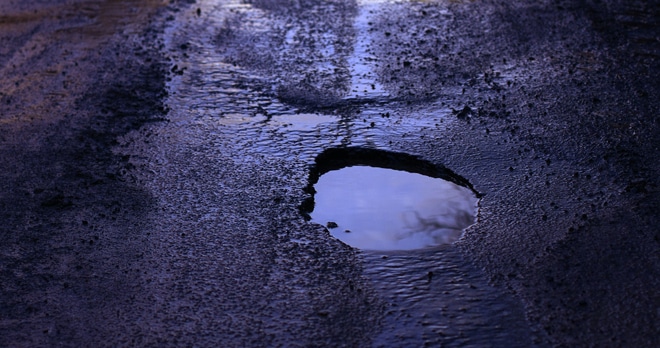
Potholes
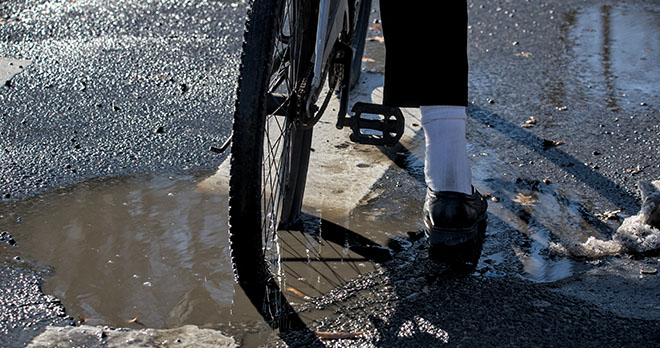
Our roads are littered with them. Some can be huge, and difficult to see in the dark. Obviously, potholes can be the cause of injuries to cyclists on our roads, especially in the winter months. When it’s dark or wet, it can be hard to see these sorts of hazards, so it’s worth making a mental note when you see them, investing in good lights to be prepared, and reporting them to the local authority if you spot them.
-
Icy weather
If the weather takes a particularly cold turn, you may discover that your preferred cycling route becomes an ice rink. With smaller roads and cycle paths less likely to be salted or gritted, you may find the road surface more dangerous than busier roads. Have alternative routes in mind and be prepared for more traffic on larger roads.
-
Poor visibility
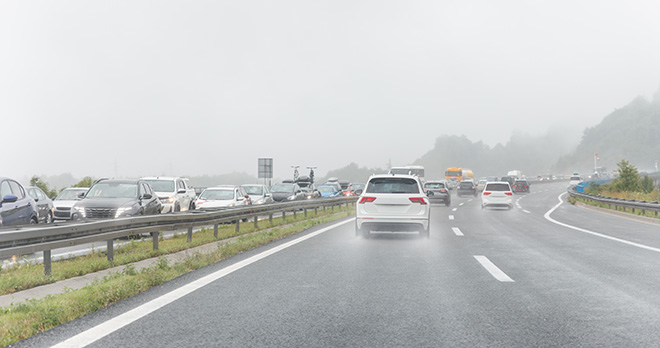
For a variety of reasons, visibility is generally worse in the darker winter months. A little more thought is required to make sure bike lights are charged, and bright enough to light the way. That is all within our control though. Something I find more concerning in the winter are the motorists that do not properly clear ice, steam, or water from their windscreens, windows or mirrors before setting off. Too many times, motorists abandon manoeuvres when they’ve seen me at the last minute, or worse still, behave in a way that demonstrates they have not seen me at all.
-
Debris on the road
Grit, glass, slippery leaves, rubbish, and other debris is more prevalent in winter. This type of debris can be quite jarring if we lose traction, and can of course cause punctures.
-
Punctures
Investing in good quality tyres is definitely worthwhile. Regularly checking tyres for damage, removing debris and trying to avoid cycling in the gutter are all sensible steps to take. Touch wood, I haven’t had any punctures yet this winter. I probably have an even number through the year, but that’s mainly because my mileage increases in the summer.
-
Equipment failure
Defective equipment is a year round risk, but it’s sensible to look after your kit, have your bike serviced by an expert, and set up your bike up for winter cycling by using things like mud guards.
-
Sudden downpours
Our weather is nothing if not unpredictable. You may suddenly find yourself in a downpour which reduces your visibility and makes the road surface more difficult to navigate. As well as having the right clothing and equipment, try to avoid puddles where possible – they can often conceal potholes, debris and other things to avoid.
How can cyclists ensure they’re safe on the road?
I appreciate that in many ways this is simply the wrong question to ask. Clearly, we are hugely reliant on other road users to ensure our safety given our vulnerability amongst motor vehicles.
According to the Highway Code’s hierarchy of road users (adopted in 2022), it is incumbent on larger vehicles such as cars to take reasonable care around road users more vulnerable than themselves. However, the Highway Code also does give guidance to cyclists on what they can do to ensure as far as possible that they are safe, visible and not presenting a danger to others, such as pedestrians who are identified as more vulnerable in the hierarchy.
If you’re new to cycling or thinking about starting, these are some of the basic recommendations and requirements in the Highway Code (the requirements that must be complied with are marked with an *) that you should have in mind, such as:
- wear light coloured, reflective or fluorescent items of clothing or accessories;
- wear a cycle helmet.
- *at night, having white front and red rear lights lit, and having a red rear reflector fitted;
- use cycle lanes and tracks where it makes our journey safer to do so;
- *do not cycle on pavements;
- avoid actions which could cause you to lose control of your bicycle;
- not travelling close behind other vehicles in case they stop suddenly;
- watch out for obstructions on the road;
- give clear signals to other road users when you intend to do something, such as turning;
- ride in the centre of your lane on narrow or quiet stretches of road and junctions to make yourself clearly visible, particularly in places where it would be unsafe for a vehicle to overtake;
- *do not ride in a dangerous, careless or inconsiderate manner.
What should motorists have in mind?
Motorists should behave on the road in a way that protects the safety of vulnerable road users. The Highway Code provides the following guidance for motorists to protect road users who require this extra care. They should:
- take extra care at junctions (whether entering or exiting) to look out for motorcyclists and cyclists, looking out for these vulnerable road users when turning across slow moving traffic and ensuring that any motorcyclist or cyclist doesn’t have to stop or swerve to avoid their vehicle when doing so;
- when overtaking give any vulnerable road user, including cyclists, as much room as they would when overtaking a car, taking extra care and giving more space in bad weather and at night;
- when overtaking watch for a cyclist looking over their shoulder, which may mean the cyclist intends to pull out, turn right or change direction;
- be aware that on narrow roads, quiet roads and streets, and at junctions cyclists may sometimes ride in the centre lane and allow them to do so;
- allow cyclists to ride two abreast on narrow roads, quiet roads and streets, and at junctions, as it may be safer for them to do so;
- be aware that cyclists are advised to ride at least a door’s width (or 1 metre) from parked cars for their safety;
- consider that cyclists may suddenly need to avoid hazards on the road, such as potholes or ice, and give cyclists plenty of room in case a sudden change of direction to avoid a hazard is needed.
What should cyclists do in the event of an accident?
Unfortunately, road traffic collisions are still a regular occurrence on our roads.
In the event that you do have an accident when out cycling in winter, the first thing to do (if possible) is to get to safety. Once you are safe or as soon as possible, speak to emergency services about the incident.
When and if possible, take photos and witness details as soon as you can – including details of the negligent motorist (if relevant) – and consider legal advice at a later date if you think you have a claim for your injury.
What is most likely to cause an accident when out on your bike in winter?
According to the Government’s data, between 2020 and 2024 almost half of pedal cycle fatalities were in two vehicle collisions between a bike and a car, with the most common road safety factor being related to ineffective observation (and most commonly by the other vehicle involved). Therefore, it’s most likely that a collision would occur either due to a driver’s inattention in the winter months when reduced visibility can often require more care and reduced speeds. Most of the civil cycling claims I am instructed to bring arise as a result of cyclists being injured or killed by cars, vans and lorries.
What rights do cyclists have in the event of a collision with another vehicle?
If you’re injured in an accident when out on your bicycle due to someone else’s negligence, you have a right to claim compensation for both your injuries and any resulting financial losses.
There are two key legal principles which apply in the event of a cycling accident, related to the Highway Code, namely:
-
Causative potency
As now enshrined in the Highway Code’s hierarchy of road users, causative potency describes the potential for a road user or vehicle to cause damage to others. This means that, should you be injured in a collision with a car, the presumption is that you were unlikely to have been able to cause damage to the driver, which will be taken into account when deciding who is liable for the collision.
-
Contributory negligence
This legal principle enables for a decision to be made as to who is ‘most’ liable for a collision whilst allowing for another party to bear a proportion of the responsibility. If one party is wholly at fault, any resulting compensation would be paid in full, however should a road user be found to have been contributorily negligent – i.e. acting in a way that may have caused or worsened their injury, despite being injured themselves – fault will be apportioned, usually on a percentage basis.
What if the cause of the accident wasn’t another road user?
Potholes are, as mentioned already, a big risk when riding on the roads in winter. Should you be injured in an accident involving a pothole, you still have recourse to claim compensation albeit from the party responsible for maintaining the road surface.
Riding your bike in winter can be a fantastic way to get out of the house, travel in an environmentally friendly way, get some exercise, and see some more of your local area. Whilst our roads have generally become safer for cyclists over the years, there are still particular winter hazards to be aware of.
I hope to have explained some of the things to keep in mind, and given some further information should you be involved in an accident or collision.
If you’ve been injured whilst cycling on the roads this winter and are looking for support with a claim for compensation, we’re here to help.
Call now