The NHS testing “bottleneck” – how has it come to this, and where do they go from here?

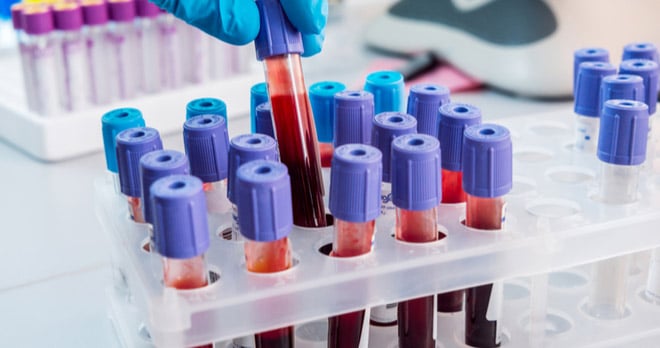
A BBC investigation has obtained figures under the Freedom of Information Act which show that there are more than a million patients across the UK waiting for tests such as MRI and CT scans, ultrasound scans and endoscopies. While the target waiting time is 6 weeks, 29,000 patients are waiting longer than that, while one in seven patients has to wait for more than three months.
A possible cause of the problem identified by the BBC was the shortage of radiographers nationally; of 14,067 funded radiography posts in April 2018, 1,283 were vacant. Certainly the shortage of radiographers is a well-known and well-established problem. However, the Chief Executive of the Society of Radiographers has been quoted as also blaming “ageing machines that are not as efficient as they should be.”
The reality of course is that these are long-term issues resulting from long-term and chronic underfunding of the NHS. Even Philip Hammond’s recent “giveaway Budget” will not come close to solving the problem; the Health Foundation think-tank has analysed the Budget and argues that, while the NHS England budget for day-to-day running costs will rise by nearly £4 billion next year, there will be a reduction of £1 billion in other areas of the health budget. It doesn’t help that an apparent culture of bullying, found in an investigation by the Guardian released this week, could be costing the NHS over £2 billion a year.
How might delays of vital tests affect patients?
Sadly, the answer is all too obvious where a patient has a serious condition; patients will have their prognosis adversely affected, and some may die unnecessarily. As a clinical negligence lawyer, I have seen many cases over the years where delays in carrying out vital investigations have been found to amount to negligence, and been found to have caused injury and even death. Cancer is an obvious area where prompt and regular screening can save lives, and where it is vital that diagnostic tests are available and performed swiftly when indicated.
If the “bottleneck” in NHS testing is not resolved, an inevitable outcome will be a further increase also in litigation, and a further blow to NHS budgets in terms of paying out damages to injured patients and their families.
This feels like a vicious cycle: underfunding creating litigation, creating a further financial burden on the NHS and worsening the underfunding problem.
The obvious “kneejerk” response is “blame the greedy no-win-no-fee lawyers”, but however many times the Daily Mail says it, it still won’t be the correct solution! Patients in need of medical treatment deserve and should receive competent treatment, including timely investigations, and when the failure to provide such treatment is found to be negligent, they deserve full compensation. Lawyers are only ensuring that justice is done.
What needs to be done?
In fairness to the Government, many of the right steps are already being taken. Health Education England’s Cancer Workforce Plan (published in 2017) sets out plans to recruit an extra 300 diagnostic radiographers, while recognising that technology is inadequate and not sufficiently “state of the art”.
However, the trouble with long-term decline is that it requires long-term recovery. A chronic shortage of people going into a profession cannot be reversed overnight. The policies may be in place to recruit more radiographers, but a shortfall of 1,283 will take significant time to remedy. As a country we continue to underspend on health as a percentage of GDP compared to many of our (erstwhile) European partners, and the purse strings will have to continue to be loosened over a prolonged period if the required radical improvements are to be seen.