Charity spotlight: Celebrating 20 years of HASAG
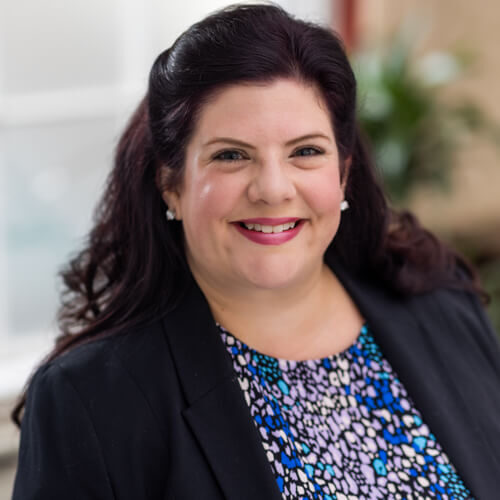

In this article, Partner Jen Seavor from our Respiratory Disease team explains the work she does before handing over to Lynne Squibb, CEO the incredible charity, HASAG, who has been supporting those affected by industrial disease for the past 20 years.
Asbestos: How the ‘magic mineral’ continues to cause fatalities
Our Respiratory Disease team specialise in acting for people with lung diseases caused by exposure to dusts including asbestos and silica. These diseases include mesothelioma, lung cancer, asbestosis, diffuse pleural thickening and silicosis.
What is mesothelioma?
Mesothelioma is an incurable cancer almost exclusively caused by asbestos. It can develop after such low levels of exposure, that often people affected do not immediately know how they have come in to contact with asbestos and this must be investigated. Whilst in recent years treatment options aimed at living well, reducing symptoms and extending life expectancy have improved, the reality is that the condition will eventually prove fatal.
How do people come in to contact with asbestos?
Those who develop mesothelioma come from all walks of life. Increasingly, we are seeing people who have never worked with asbestos or knowingly come in to contact with it develop the condition. Exposures can occur not just in an occupational setting but from the work clothes of loved ones who have used asbestos, due to living near to factories or industrial premises where asbestos was used, or from buildings containing asbestos materials which may not have been managed properly – including schools and hospitals – or where there have been building or maintenance works, or even general wear and tear which has led to the disturbance of asbestos materials and the release of dust.
More recently it has come to light that people may have come in to contact with asbestos from using powders and make up products which contain talc which has been contaminated with asbestos in the mining process. Alarmingly, even children’s toys containing sand or powders have been contaminated and recalled recently.
Those impacted by mesothelioma range in age – my youngest client to date being only 20 and eldest 95. Each person impacted will inevitably lose years of their natural life due to inhaling asbestos dust, usually in circumstances which could have been avoided. Whilst the use of asbestos itself was banned in England and Wales in 1999, its tragic legacy continues as it can take decades for mesothelioma to develop, and because so much asbestos remains in buildings still to this day, people are continuing to be exposed to asbestos materials which are damaged or have deteriorated – for example as a result of unstable RAAC concrete products.
Hope and support
Whilst a diagnosis of mesothelioma, or any other asbestos or dust disease, is devastating, we work with those impacted to support them on their journey. Although compensation cannot change the outcome it can support those impacted by enabling them to access professional care and support, and, where appropriate, private treatments not yet available through the NHS, which can support quality of life and living well with the condition for as long as possible.
For several years now we have been proud to work with HASAG, a charity which offers unparallelled support to those with asbestos conditions and their families. This year they are celebrating their 20th Anniversary and the demand for their services remains significant. From advising people about their entitlement to government benefits following diagnosis, dealing with the paperwork and applications, to chasing the DWP; for HASAG those who find themselves in the awful position of having been diagnosed with a condition like mesothelioma, and their family members, are at the forefront of their work.
Importantly, the charity takes a holistic approach, supporting families as well as those diagnosed. They offer coffee mornings at multiple locations across the south bringing people together to share experiences and support each other. In addition, they provide specialist nurse and legal support as well as free services such as counselling. If that were not enough, the charity fund specialist nurses in several hospitals, meaning those diagnosed have bespoke medical advice and support available. They also work tirelessly to raise awareness of the dangers of asbestos, advocate and campaign for change. The charity very much encompasses our ‘team around the client’ ethos.
However, I will let Lynne Squibb, CEO and Founder of HASAG tell you about their story. It’s incredible what they have achieved in 20 years, making such a positive difference to the lives of so many living with or impacted by life limiting illnesses.
HASAG: 20 years on
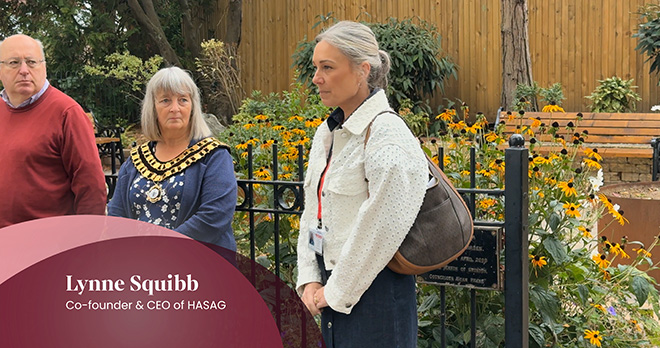
Go back to 2005. My dad, Dave Salisbury, is a fit and active man. He is enjoying his well-earned retirement from a lifetime working as a carriage builder for British Rail. Dad noticed that he was starting to feel more breathless doing simple things, like walking to the shop for his morning paper.
A visit to the doctor followed. He was advised to go straight to hospital as he thought there was fluid around his lungs. Of course, he didn’t, not straight away anyway! After some time, with his breathlessness getting worse, he went to the Casualty ward at Winchester. Five litres of fluid was drained from his lungs. What followed was the diagnosis he had been dreading. Mesothelioma, an illness he was only too familiar with, after seeing many of his work colleagues suffer with it.
Mum, my sister Diane, and I were devasted at the diagnosis. There was no cure, and treatment at the time was very limited. For the family, there was nobody to turn to for support. We felt lost.
Sadly, Dad lost his battle in December 2005, less than a year after diagnosis. Diane and I were determined to try and do something to help other families in the same situation. We came up with the idea of a coffee morning in Southampton. People diagnosed with mesothelioma and their families could meet up once a month for a cup of tea and a chat. They could compare stories and help each other. The monthly coffee mornings started and were a great success.
In 2006, HASAG became a registered charity. Following word of mouth, more hospitals approached HASAG to ask if they would look after their patients. It soon became a full-time job for me and Diane. From discussions with patients at our coffee mornings, we started to visit them in their homes to complete benefits forms. This was in 2007.
We were then approached by the Queen Alexandra Hospital in Portsmouth. Would we be interested in starting a support group in Portsmouth? A second monthly coffee morning followed. We were also asked to give benefits advice to their patients diagnosed with an asbestos-related disease. This was normally done by the nurses at the hospital but took up a huge chunk of their time which would be much better used caring for their patients. Of course, we agreed. The Queen Alexandra was the first hospital we developed a relationship with.
Step forward to the current day. HASAG now run eight monthly coffee mornings in Southampton, Portsmouth, Sussex, Surrey, Berkshire, London, and Colchester. We have an additional monthly coffee morning in Essex which alternates between Laindon and Braintree, and a further one on the Isle of Wight bi-monthly.
At the centre of all this are our lovely patients. Our community suggested that it would be helpful if a nurse could attend each coffee morning, where they could offer advice and information, and a solicitor who could offer legal advice. We have a close relationship with Mesothelioma UK, and their nurses are only too happy to attend. We also invite specialist lawyers to our coffee mornings to help our patients.
We now have our own Community Mesothelioma Nurse Specialist, Rachel Thomas. Rachel has over 20 years’ experience as a specialist mesothelioma nurse. Working closely with patients’ own medical teams she is on hand to advise, visit and comfort our patients. Rachel also started our Buddy Service. The aim of the service is not to provide any medical treatment or advice but more a listening ear at a time when patients and their families can feel very overwhelmed and alone. All our Buddies are existing patients and carers who have extensive experience of what it is like to live with a mesothelioma diagnosis.
We offer support to patients across the South and South-East of England, including the London boroughs and Home Counties. We now work closely with over 100 hospitals in the region. I have mentioned Mesothelioma UK, we are proud to part-fund two specialist mesothelioma nurse positions within the NHS.
Our team of benefits advisors are very experienced and well-trained. They also have first-hand experience of family members with mesothelioma. The process of applying for benefits is made much easier for our patients. We visit them in their homes and complete all the relevant benefit application paperwork for them. We then liaise closely with the Department for Work and Pensions to see that the benefits are approved as soon as possible. In some cases, patients can be worse off claiming everything they are entitled to, as other payments they receive can be affected. Our team are trained to do ‘better-off’ calculations to ensure that patients do not lose out financially.
Since 2020, we have offered a free counselling service to our patients. This was from feedback we received at our coffee mornings as something that could really help our community and their families. When someone is diagnosed with an asbestos-related disease their first thought will probably be that their ‘normal’ lives are about to change. This often leads to feelings of shock, disbelief, anger, fright and worry. When diagnosed, emotions play an important role in your wellbeing and talking to family and friends definitely helps. However, some people fear the upset that this could bring and won’t, or indeed can’t, talk to their family and this can lead to strained family relationships. Talking to a professional counsellor in private sessions really helps our patients and their loved ones, giving them the mental tools to deal with an emotionally challenging situation.
In 2025 we launched our first podcast – Breathe Strong – in partnership with EGFR+ UK. These involve real conversations with people living with mesothelioma and EGFR-positive lung cancer and those who care for them. Each episode explores diagnosis, treatment, family life and the practical realities of living with these conditions.
Since HASAG was formed, we have supported over 9,000 patients. We launched our Counselling Service in 2020 and to date have provided over 1,300 sessions for our patients and their families. We have donated over £1,400,000 to Mesothelioma UK, The June Hancock Mesothelioma Research Fund, The Mick Knighton Mesothelioma Research Fund and to lung nurses to attend conferences.
Sadly, our story is far from over. The demand for our services remains as high as it has ever been. Treatments for mesothelioma are improving, but still there is no cure. As rewarding as it is to support some fantastic people, we hope that there will come a time when we aren’t needed.
Lynne Squibb, HASAG CEO and Founder
Help and Support for Those Affected By Mesothelioma and Asbestosis – HASAG
Contact Jennifer.
Our inquests and fatal claims expertise.

More articles from our Team Around the Client Series and Inquests and Fatal Claims.




View more articles related to Inquests and Fatal Claims and Team Around the Client