What therapy options are there for Erb’s palsy?

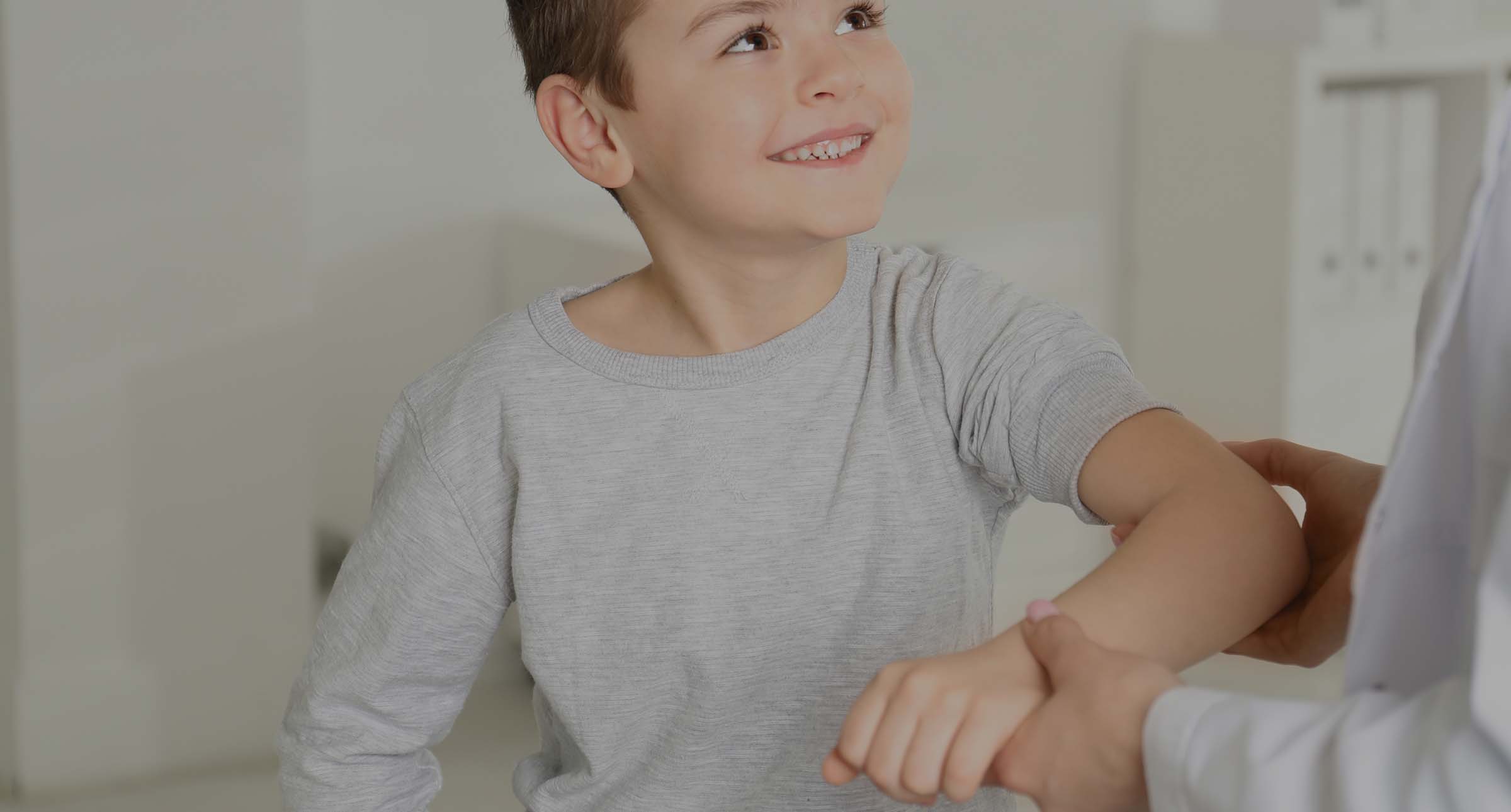
Caring for a child with a brachial plexus birth injury is never a journey taken alone. There are many options for children living with Erb’s palsy to receive therapeutic treatment, either to help with limb strength or just to adapt to their disability as they grow.
The treatments available for children with Erb’s palsy
Brachial plexus Birth injury affects more than a child’s movement. It touches family life, confidence, development, and identity. Because of this, the most successful approach is a combined one. With this in mind, there is a whole range of treatment options available for children with Erb’s palsy, including:
- physiotherapy helps strengthen, stretch, encourage movement, and support early motor development;
- occupational therapy focuses on daily activities—feeding, play, dressing, and later handwriting and independence;
- psychology and play therapy provide space for children and parents to make sense of their experiences, especially when treatment is long or emotionally demanding;
- surgery, when needed, offers a chance to repair nerves, improve function, and create opportunities for growth and recovery.
Each discipline delivers something different—but, in our experience, the best outcomes happen when everyone involved pulls together: families, therapists, psychologists, surgeons, and researchers.
How does physiotherapy treat Erb’s palsy?
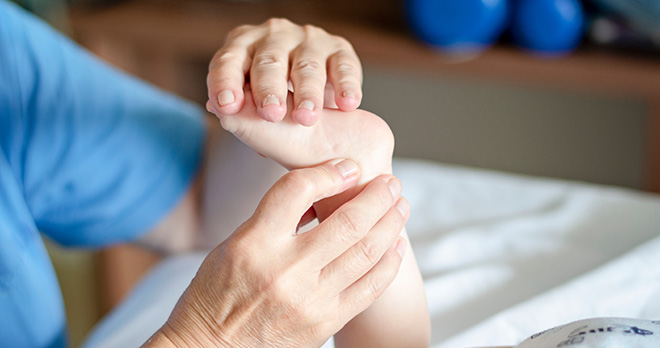
Physiotherapy should start as soon as possible and often starts very early in life with the aim of maximising range of movement and preventing stiffness. Clinicians can then assess the individual patient and come up with a plan of action.
Exercises target the core muscles and the shoulder girdle muscles in order to build good “building blocks” as a foundation for improving functional skills. For a more in-depth look into physiotherapy for Erb’s, please click here.
Another important aspect is the mental health of both the injured child and its mother. It is very important to tackle psychological issues early on before they get worse.
What does occupational therapy do for Erb’s palsy?
Occupational therapists give practical help and advice on carrying out everyday tasks that people with Erb’s palsy might struggle with. The aim is to ensure as much independence as possible whether at home or in the community.
How can occupational therapists and physiotherapists help with Erb's palsy?
Occupational therapists give practical help and advice on carrying out everyday tasks that people with Erb’s palsy might struggle with. The aim is to ensure as much independence as possible whether at home or in the community.
For example, an occupational therapist can examine your home and routines, and advise on adaptations and equipment that might help in the kitchen or bathroom. They will also teach special techniques that can improve the performance of everyday tasks, especially self-care tasks such as eating, washing and dressing.
Therapists can also help in work or school settings by suggesting improvements to aid access and inclusion, including access to sports and aids for typing etc.
This help is vital for your – or your child’s – sense of belonging, independence and self-esteem.
Can physical therapy ‘cure’ a brachial plexus injury?
Physiotherapy is not a cure to Erb’s palsy, but it can greatly alleviate one’s suffering. For children with Erb’s palsy, physiotherapy is considered essential until skeletal maturity.
The basic principle is that physiotherapy will improve quality of life and that it cannot only take place at specialised treatment centres, but that it needs to take place at home too.
Education therefore needs to be provided to parents and they need to ensure they perform the exercises with the injured child.
What are the physical therapy goals for brachial plexus injury?
The aim of physiotherapy is usually to focus directly on strengthening the core and shoulder girdle muscles which can improve postural alignment, range of movement, a reduction in arm length difference and a reduced risk of secondary complications.
Is there a cure expected for Erb’s palsy injuries soon?
At the Peripheral Nerve Injury Research Unit and the University College London Centre for Nerve Engineering they are working very hard on research into the way nerves heal. They are working towards:
- developing a drug to help nerve recovery
- how to detect which injuries will best benefit from surgery
- how to make a new nerve graft in the lab but with the child’s own cells, so we don’t have to take nerves from other part of the body to repair the injury.
- how to train the body better to improve function and reduce pain.
Organisations such as PROMPT are also engaged in supporting and teaching with midwives and obstetricians, as the best cure for Erb’s palsy is prevention. If it does occur getting the right treatment as soon as possible is vital. It is important to continue to ensure that the profile of this injury is raised and education and information to be freely available to all, with early and clear pathways to referral for specialist help from a full team of trained experts.
Researchers are also exploring the possibility of a biomarker that could be tested shortly after birth to measure the amount of nerve damage. One promising candidate is neurofilament light chain (NfL) — a molecule released into the blood and measurable in a heel prick or urine test when axons (the long parts of nerves) are injured.
According to experts Hazel Brown & Tom Quick who spoke to us on this topic, this could have huge ramifications for outcomes after brachial plexus injury:
“Imagine being able to tell, within hours or days of birth how much nerve damage has occurred, how severe the brachial plexus injury may be, and whether early surgery is likely to be of help. Such a test would transform diagnosis, speed up treatment, and help families and clinicians communicate with confidence from the very beginning. It would replace uncertainty with clarity and support truly personalised care.”
Similarly, experts like Hazel and Tom are hoping to build a national register of brachial plexus birth injury to track outcomes, understand what treatments work best, and identify where services may need to improve. The aim being to deliver better treatment and outcomes for patients and families living with Erb’s palsy.
We try to play our part in that awareness raising and you can access various information webinars here which we have recorded with Trustees of the Erb’s Palsy Group, our clients and medical experts to highlight some of the everyday issues of living with Erb’s palsy.
Can Erb’s palsy get worse?
If untreated, nerve injury itself will not get worse, but there can be a range of adverse consequences including loss of movement, loss of muscle tone, pain in the affected limb and in some instances shoulder dislocation. This does not mean that surgery is always the preferred course of action.
Recent literature does not seem to suggest a clear and positive correlation between younger age at surgery and a better outcome.
What are the long-term effects of shoulder dystocia?
Shoulder dystocia can result in debilitating permanent nerve injury and hypoxic brain injury. Erb’s palsy is one of the most severe injuries that can arise from shoulder dystocia. Erb’s palsy can be permanent and very limiting for sufferers.
Another long-term effect that can occur in the event of shoulder dystocia injury is cerebral palsy. If shoulder dystocia is not recognised and managed well, patients can sustain hypoxic brain injury.
What other interventions are there for Erb’s palsy?
Other interventions available for Erb’s palsy patients include neuromuscular electrical stimulation, hydrotherapy, constraint-induced aphasia therapy, massage, botulinium toxin injections and others.
The degree to which these interventions can help vary greatly depending on the degree of injury, however some patients report a positive outcome. Such interventions should be discussed with the treating clinician.
How can you access therapy for a child with Erb’s palsy?
You can seek a referral to physiotherapy from your child’s treating physicians, such as paediatric orthopaedics, general practitioners and paediatric orthopaedic surgeons.
Why can’t my child with Erb’s palsy get NHS physiotherapy?
Pathways to physiotherapy should be available through the NHS, if your child is suffering with Erb’s palsy. That being said, if you are not able to obtain funding through the NHS you should consider attending training sessions privately as early as possible.
You can then carry out exercises at home, in order to avoid stiffness and problems with range of motion which can become permanent. It is very important to receive some initial physiotherapy training sessions with trained professionals, so that the parents can learn useful exercises which can then be performed at home.

Read our guide to Erb's palsy
We’re here to help you understand Erb’s palsy. Causes. Symptoms. Treatment. Whatever you need to know, we’ve got you covered.
Find out more about causes, symptoms, support and legal issues in our guide to Erb’s palsy.
If your child is living with Erb’s palsy as a result of medical negligence at birth, our legal specialists may be able to help you seek compensation.
Call now