From craft kits to cosmetics: asbestos in children’s products

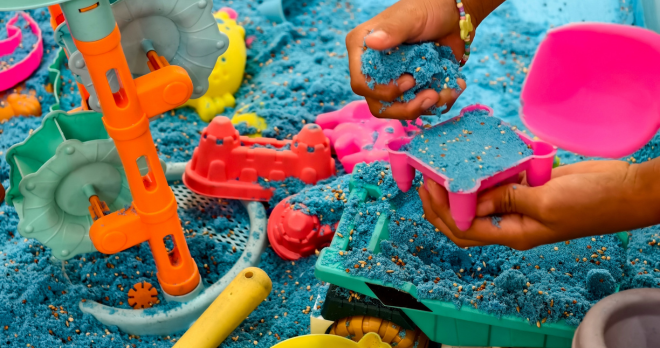
Asbestos is hardly something parents expect to find in their children's toys or craft kits. Following a series of product recalls in 2026, Olivia Hanna, a solicitor in our Respiratory Disease team, looks at how contamination can occur, the potential health risks and what these discoveries mean for product safety.
There have been a worrying number of recalls involving children’s toys this year. In April, ITV News reported that more than 100 children’s products, including craft kits and sensory toys, had been withdrawn from sale since January because of concerns about asbestos.
Asbestos has been banned in the UK since 1999. Its discovery in products intended for children is therefore a real cause for concern.
Asbestos in children's products: recent recalls
One notable example is Hobbycraft’s Giant Box of Craft, recalled following the discovery of tremolite asbestos in its coloured play sand.
An urgent recall was also issued for the Crayola-branded Discovery Craft Box, sold by retailers including Asda, The Works and Sainsbury’s, because its play sand was suspected of containing asbestos.
Certain toys within the Stretcherz range were also recalled. These stretchable sensory toys contain a sand-like filling which testing indicated could contain asbestos. They had been sold by numerous major retailers, including Aldi, Argos, Asda, Smyths Toys, Tesco, TK Maxx/Homesense and The Works.
In May, chrysotile asbestos was also discovered in play sand at Whitley Lodge First School in North Tyneside.
Unfortunately, this is not the first time asbestos has been found in products intended for children. In 2019, following testing by the US Food and Drug Administration, Claire’s Accessories recalled several cosmetics, including eyeshadows and face powders, after tremolite asbestos was identified.
These products are applied directly to the face, often using a brush or fingers. If the powder contains asbestos, there is a risk of breathing in fibres released during use.
How do children's products become contaminated?
Two forms of asbestos identified in contaminated children’s products are chrysotile and tremolite.
Chrysotile, commonly known as white asbestos, has soft, curved fibres and was historically the most widely used type. Tremolite belongs to the amphibole group and has straighter, needle-like fibres. Both can cause serious asbestos-related diseases when inhaled, although amphibole fibres are generally considered more hazardous.
In the cases involving sand and talc, asbestos has not necessarily been deliberately added to the products. It occurs naturally in some rock formations, sometimes alongside minerals mined for commercial use. Sand and talc can therefore contain asbestos if the deposits from which they originate are contaminated.
Unless adequate precautions are taken during mining, processing and testing, those fibres may go undetected and enter the manufacturing process. By the time a finished toy or cosmetic reaches a retailer, the contamination may be impossible for a consumer to recognise.
This helps explain previous concerns about asbestos in talcum powder, historically used on babies and children, and in talc-containing cosmetics.
Have the contaminated products caused harm?
One recurring theme in reports about these recalls is the reassurance that there is no evidence the affected products have caused harm.
However, asbestos-related diseases such as mesothelioma can take decades to develop. It is therefore too early to rule out any possible long-term consequences.
Equally, parents should not be caused unnecessary alarm. In June 2026, the Office for Product Safety and Standards (OPSS), the UK Health Security Agency and the Health and Safety Executive issued a joint statement explaining that health risks from normal use of the recalled products were expected to be low, even following occasional short-term exposure.
The risk depends on how much asbestos is present, whether fibres become airborne and how much is inhaled over what period. Asbestosis, for example, is generally associated with substantial or prolonged exposure.
The Government’s assessment should offer some reassurance to parents whose children have played with recalled toys. Exposure does not mean that a child will go on to develop an asbestos-related disease.
Nevertheless, because of the long latency period associated with mesothelioma, any illness resulting from exposure might not become apparent for decades.
What if a product contains traces of asbestos or is labelled 'asbestos-free'?
The Hobbycraft play sand was manufactured in China. In March 2026, the British Occupational Hygiene Society highlighted other Chinese made products described as ‘asbestos free’ which had in fact been found to contain asbestos.
It is a reminder that assurances from overseas suppliers cannot always be taken at face value.
The UK takes a zero-tolerance approach to asbestos in consumer products, including those containing only small amounts. There is no recognised safe threshold of exposure below which asbestos can be assumed to pose no risk.
Yet contamination cannot necessarily be identified by reading an ingredient list or product label.
Choosing talc-free cosmetics may avoid one potential source of contamination. Parents cannot, however, be expected to establish the mineral composition of the sand in their children’s toys.
What is being done to protect consumers?
In July 2026, the OPSS published guidance for businesses placing sand-containing toys on the UK market. It makes clear that manufacturers and importers must not rely solely on testing the finished product to establish that it is free from asbestos.
Testing is important, but contamination may be unevenly distributed. A negative result from one sample cannot guarantee that the whole product is asbestos-free.
Businesses are therefore expected to understand where their raw materials originate, assess risks throughout their supply chains, obtain appropriate assurances from suppliers and keep records demonstrating the steps taken to ensure safety.
Where asbestos contamination is identified, they must act promptly to address risks, including withdrawing or recalling affected products and giving consumers clear information about what to do next.
Ultimately, businesses must be able to demonstrate that the toys they place on the UK market are safe.
Do parents also have a responsibility?
Parents and guardians have every right to expect the toys they buy for their children to be safe.
What makes the Hobbycraft case especially concerning is that it was a parent who recognised the coloured sand from reports of recalls in Australia and New Zealand, arranged independent testing and alerted the retailer when three of the five bottles were found to contain tremolite asbestos.
Had that parent not taken the initiative, the contamination might have remained undiscovered for much longer.
The incident demonstrates the importance of vigilance and reporting concerns, but parents should not have to commission laboratory testing to establish whether a toy is safe. That responsibility rests with manufacturers, importers and retailers.
Parents can check product recall notices and follow the relevant advice if they have bought an affected product.
The Government has published guidance on asbestos in consumer products, including safe handling and disposal. A recalled toy should no longer be used, and any instructions about cleaning, return or disposal should be followed carefully.
If sand has been spilled, the Government advises against anything that might stir up dust. It recommends wiping the area with wet cloths, wearing gloves and a suitable mask, and double-bagging contaminated material.
Could the recalls lead to future asbestos claims?
Manufacturers, importers and retailers have legal responsibilities to ensure that products placed on the market are safe. Where asbestos contamination is discovered, businesses may face regulatory investigations, recalls and potentially civil claims if someone suffers injury as a result.
Years from now, specialist asbestos solicitors may be asked to investigate whether someone’s illness could be linked to a contaminated toy or cosmetic they used as a child.
Whether any such claim could succeed would depend on the circumstances, including the evidence of exposure, the nature of any illness, causation and the applicable legal time limits. The presence of asbestos in a toy would not, on its own, establish a right to compensation.
Looking ahead
The recent recalls demonstrate that asbestos contamination is not merely a historic concern. Although the Government considers the risks from normal use of the recalled products to be low, their contamination raises important questions about the effectiveness of supply-chain controls and product safety.
Parents should be able to trust that the toys they buy for their children are safe. It should not take independent testing arranged by a concerned parent to establish otherwise.

Our respiratory disease publication
Read the latest news and advice from our team’s “Airborne” magazine