Amos report on maternity services: Why this must be the moment England finally listens to women

Hannah Blackwell, a Partner in the Clinical Negligence Team and an obstetric negligence specialist, comments on the findings of the Amos report.
Independent Investigation into Maternity and Neonatal Services in England
Every new review into maternity care raises the same question for families who’ve already lived through avoidable harm: Will anything actually change this time? After so many inquiries, it’s understandable if some struggle to believe another report will make a difference.
Baroness Valerie Amos’ report – Independent Investigation into Maternity and Neonatal Services in England – doesn’t simply identify individual failings, it argues that the system itself is no longer consistently delivering the standard of care families should be able to expect. Although most births are safe, the report finds the system cannot consistently provide safe, compassionate care for every family, which should concern everyone.
Coming just days after the Ockenden Review into Nottingham’s maternity services, the Amos report reminds us that these failures are not isolated to one hospital or region—they are systemic. In my recent article on the Ockenden report, I said that another document gathering dust on a shelf would be meaningless without action. Sadly, that’s a frustration I hear echoed by many of the families I represent. After one inquiry follows another, they understandably ask why similar failings continue to happen. Unfortunately, this latest report reaches a remarkably similar conclusion: too many previous recommendations have lost momentum or been ignored entirely.
Baroness Amos concludes that England’s maternity and neonatal system can no longer consistently deliver safe, high-quality and compassionate care, and calls for urgent, comprehensive reform.
Why the Amos report matters: Culture as a patient safety issue
Baroness Amos’ review goes beyond individual errors to examine why the healthcare system is slow to learn, identifying a fragmented, complex system where staff face constant pressure and culture undermines patient safety.
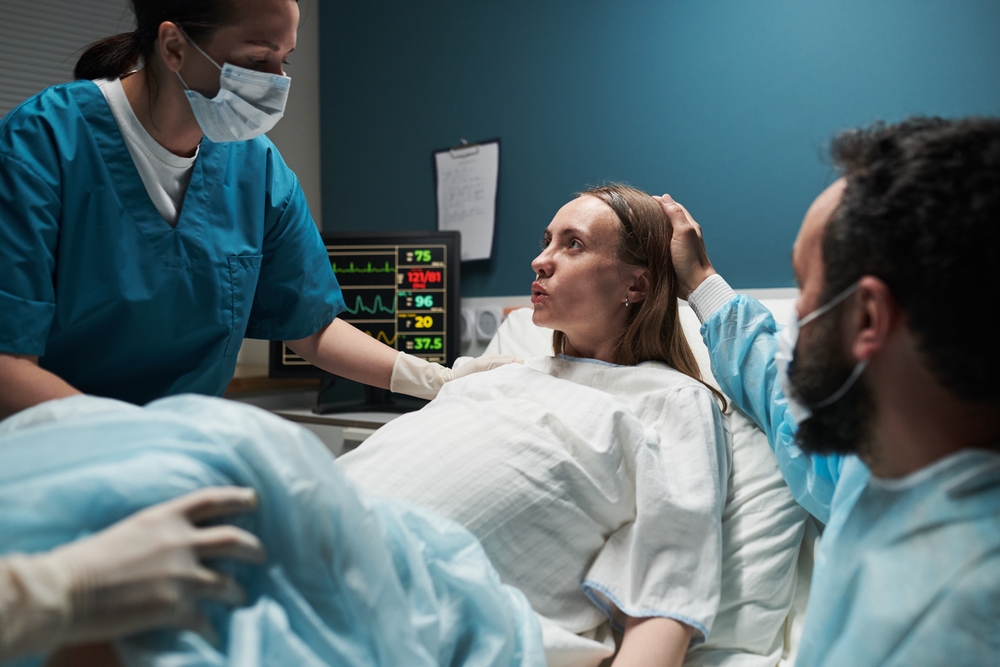
Good maternity care isn’t only about clinical skill—it’s also about recognising that women know their own bodies. Again and again, I meet mothers who tell me, “I knew something wasn’t right.” The tragedy is that they were often proved right only after opportunities to intervene had already been lost. Listening isn’t simply compassionate care—it can change outcomes.
Confronting embedded racism and health inequalities
Some of the most troubling findings concern inequalities that have been discussed for years but still persist. Black women continue to face a far greater risk of dying during pregnancy or childbirth than white women, while Asian women also experience disproportionately poorer outcomes.
These are not simply uncomfortable statistics, they represent mothers whose concerns may have been overlooked, families whose outcomes might have been different, and inequalities that have persisted for far too long. Treating them as patient safety issues, rather than unavoidable facts, is long overdue.
A system under pressure: The danger of fragmented care
None of this should be read as criticism of the dedicated professionals working in maternity services. Most midwives, obstetricians and neonatal staff are doing extraordinary work in extremely difficult circumstances. But goodwill alone cannot compensate for chronic staffing shortages, ageing facilities and growing clinical complexity.
Over the years, I’ve spoken to many clinicians who are deeply committed to providing excellent care but feel they’re working in a system that makes that increasingly difficult. That doesn’t excuse avoidable harm, but it helps explain why sustained investment is essential.
One feature I see repeatedly in serious cases is information falling through the gaps between different teams. Pregnancy isn’t one continuous service—it’s a series of handovers. When communication between teams breaks down, families can pay a devastating price.
Turning recommendations into reality: Accountability and compensation
The report’s main proposal is to establish a statutory Maternity and Neonatal Commissioner to drive improvements and enforce accountability. This role must have real enforcement powers to be effective, not just add a layer of bureaucracy.
The report recommends families have an automatic right to request an independent investigation if dissatisfied with a hospital trust’s internal review. Families often tell me they feel like observers rather than participants in investigations into what happened to them, and if confidence is to be rebuilt, those voices need to be part of the process from the beginning.
The report critiques the clinical negligence process and urges the government to consider less adversarial compensation approaches. Whilst this discussion is important, the rights of injured patients must be protected. In my experience, very few families begin by wanting compensation. Most simply want someone to explain what happened, acknowledge mistakes where they’ve been made and reassure them lessons will be learned. Legal action often follows only when those conversations never happen.
Compensation for catastrophic birth injuries is essential to fund lifelong care, therapies, and adapted accommodation. Earlier openness and support would be welcome, but the safety net for affected children must remain intact.
What the Amos report means for families seeking answers
If you are currently pregnant, most births in England and Wales are safe and positive. The report aims to drive improvement, not cause alarm.
The impact of a serious birth injury doesn’t end when a family leaves hospital. For many of the parents I work with, it’s the beginning of years of appointments, therapy, uncertainty and adapting to a very different future than the one they expected.
No family wants to find themselves needing legal advice after the birth of a child. But where avoidable mistakes have caused lifelong injury, getting specialist advice early can make a significant difference to the support available for the future.
Our guide to Birth injury claims explains the process.
Delivering lasting change beyond the headlines
One thing I’ve learned from working with families over many years is that legal outcomes are only one part of recovery. Speaking to other parents who truly understand what you’ve experienced can be just as valuable. We support online spaces such as the Little Champions Instagram community for families of children with birth injuries, and What About Mums? for maternal injuries and mental health. Connecting with others can make a significant difference in recovery.
Reports do not make maternity care safer—people do. The Amos review will only matter if its recommendations lead to different decisions on hospital wards, in boardrooms and across government. Families have heard promises before, and many have every reason to be sceptical. I hope this report proves to be different. For the sake of future parents and babies, it must.
As the Royal College of Nursing recently emphasised, this cannot become another missed opportunity. For mothers and babies nationwide, the system must change for good.
If you or you child have suffered avoidable harm, our specialist birth and maternal injuries teams are here to help.
Ask us a question