New Frontiers: A profile of Maud Lepez, and her International Injury Practice
Losing a limb or undergoing an amputation is life changing. If the injury happened abroad or involved an international element, this will inevitably affect the claims process, potentially the victim’s entitlement to compensation, and the quantum of damages. It is essential to instruct a specialist solicitor with expertise in travel law and cross-border claims. Understanding the victim’s rights and the process is essential to securing the support and compensation they deserve.
Types of international injury claims
An international claim can result from many scenarios, such as:
- Road traffic accidents abroad, or in England & Wales involving a foreign vehicle;
- Accidents at work overseas;
- Injuries caused by animals abroad;
- Holiday accidents (e.g., slips, trips, falls) in the course of a package holiday or not;
- Incidents on planes or boats;
- Sports accidents, including skiing, water sports, or extreme sports.
Specialist legal advice for international injury claims
International injury claims can be complex. With specialist legal advice and support, combined with language skills and an understanding of cultural and practical differences, the victim will navigate the process and secure the compensation they deserve.
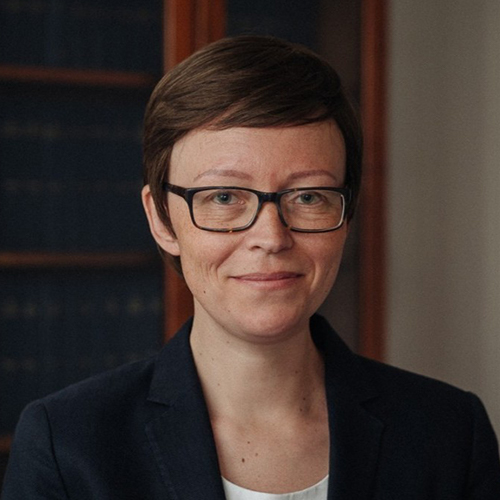
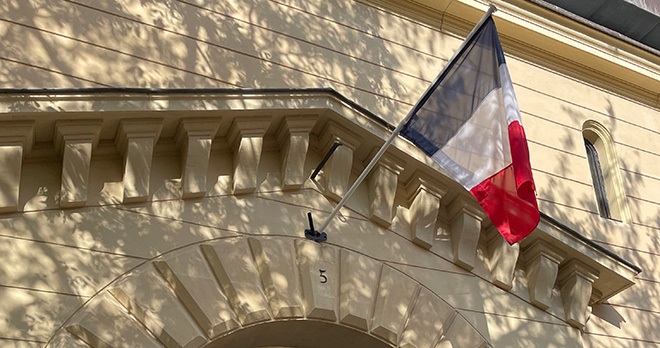
RWK Goodman’s Accidents abroad team is headed by Maud Lepez, a dual qualified solicitor and French avocate, with over 15 years personal injury cross-jurisdictional experience. Maud represents clients residing in the UK injured in France and in other countries, and foreign clients injured in the United Kingdom, having suffered the most serious and life-changing injuries, including amputations.
International injury claims always involve a question of jurisdiction (in which country the claim can be brought) and of governing law (which law applies to the claim). These are not only complex legal questions but, when there is a choice of jurisdiction and/or applicable law, having direct knowledge and experience of the different legal systems involved is invaluable in order to make strategic choices in the client’s best interests. For instance, what evidential weight a court will give to witness evidence versus documentary evidence in a claim varies hugely from one jurisdiction to another.
Bringing an international injury claim: key questions
When pursuing a cross-border claim, several legal issues may arise:
-
Limitation period:
This is the period of time a victim has to bring a claim. Whilst under the law of England & Wales the usual limitation period is three years after the accident, in other legal systems limitation periods vary hugely: only one year in Spain, but as long as 10 years in France.
-
Which country's courts have jurisdiction?:
The courts of the victim’s domicile? The courts of the country where the accident happened? Or the courts of the defendant’s domicile? Is there a choice or not? This is a complex and strategic question, which can only be answered on a case-by-case basis, and is sometimes subject to a challenge by the defendant and decided by the court at a preliminary hearing.
In the past six years, Maud successfully defended a number of jurisdiction challenges brought by defendants to claims she had started for her clients in the English courts, before and after Brexit – which had a massive impact on jurisdiction of English courts on claims related to an accident in an EU country.
-
Which law applies?:
English law, foreign law, or an international convention? Again, this very much depends on the individual circumstances of the case, and this is a separate question to the question of jurisdiction, e.g. even if the English court has jurisdiction, it may have to apply a foreign law. When the parties do not agree which law applies, the matter may be decided by the court at a preliminary hearing.
-
Liability regime:
Is it based on fault or negligence, or is a strict liability regime available? This is subject to the applicable law. For instance, if a pedestrian is struck by a car in France, under French law they will in the vast majority of cases get full compensation regardless of how the accident happened (i.e. even if they were not fully paying attention when they crossed the road), because they benefit from a strict liability regime. On the other hand, in England and Wales the pedestrian victim must prove some negligence on the part of the driver, and their right to compensation may be reduced if they are found to have negligently contributed to the occurrence of the accident.
-
Proof of injury and causation:
Compensation is subject to proving that the injuries were directly caused by the accident. Medical expert evidence is essential in that respect. Again, there may be differences between legal systems, for instance on how experts and courts treat the impact of the accident on a pre-existing condition. It is important to select the right experts, usually in the country where the claim is brought. RWK Goodman’s international team has developed a network of reliable experts in various countries to assist as and when required.
-
Damages and losses:
What compensation a victim can claim can vary significantly in different countries; methods of calculation, appreciation of evidence, and cultural differences here all have an impact on the value of the claim.
Specific challenges in cross-border claims
International cases often involve additional complexities, such as:
- Language barrier;
- Experts’ assessments in another country;
- Access to rehabilitation funded by the defendant, or not;
- Jurisdiction and applicable law disputes;
- Evidence requirements and standards;
- Calculating losses under different legal systems;
- Attending trial abroad, implying to travel and give oral evidence via an interpreter;
- Enforcing a judgment in another country.
Funding an international injury claim
Funding options vary by jurisdiction, but common methods include:
- Conditional Fee Agreements (No Win, No Fee);
- Legal expenses insurance;
- Private funding;
- Hybrid approaches, combining a fixed fee and a success fee;
- Co-counsel agreements with foreign lawyers.
RWK Goodman’s specialist solicitors always consider the options available and advise on the most appropriate for each claim.
Contact Maud.
Discover our amputation claims expertise.

Read more insights from our team.


View more articles related to Amputation and Team Around the Client